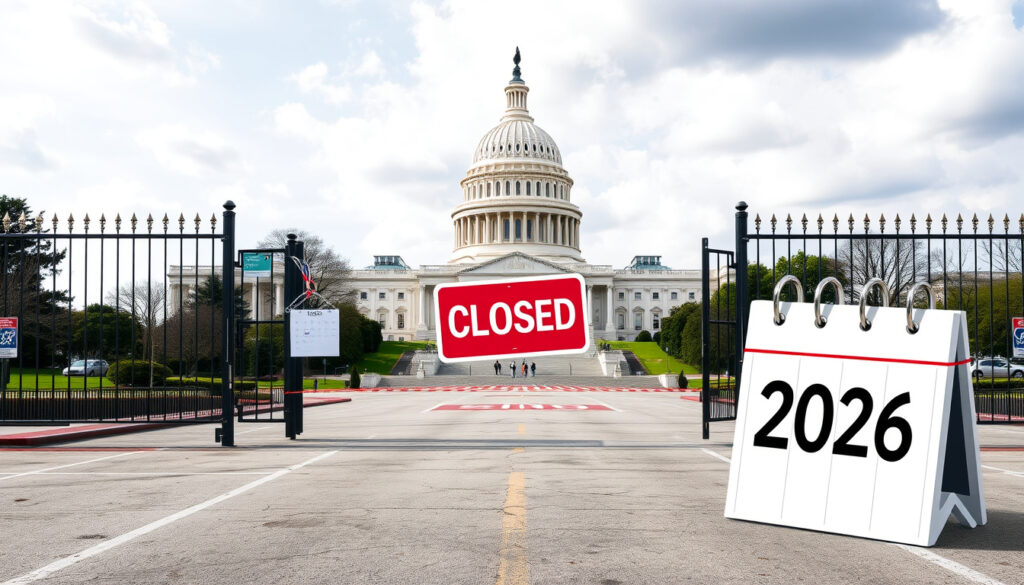
Why Is ‘Government Shutdown 2026’ Trending? What Happened
You might have noticed “government shutdown 2026” popping up in your news feed. There’s a reason: the U.S. government has locked horns over funding not once, but twice this year — and it’s not the usual budget battle. This time, the fight is squarely over immigration enforcement, targeting the Department of Homeland Security. Here’s what happened, who is affected, and why the trend keeps resurfacing.
Number of shutdowns in 2026: 2 · Agency most affected: Department of Homeland Security (DHS) · Date of first shutdown start: January 31, 2026 · Primary cause: Dispute over ICE/CBP immigration enforcement reforms · Duration estimate: Likely brief (days to weeks)
Quick snapshot
- Two shutdowns in 2026 (Committee for a Responsible Federal Budget)
- First started Jan 31, 2026 (U.S. House of Representatives)
- Centered on DHS funding (Fragomen (immigration law firm))
- DHS employees (ICE, CBP, TSA) (NPR)
- Border and immigration operations (American Immigration Council)
- Trade and travel sectors (Politico)
- Ongoing negotiations (Al Jazeera)
- Potential October 2026 deadline (Wikipedia)
- Next vote on funding bill (Al Jazeera)
Six facts, one pattern: each shutdown revolved around the same core dispute over immigration enforcement, with DHS as the bargaining chip.
| Detail | Value |
|---|---|
| Total shutdowns in 2026 | 2 |
| Affected department | Department of Homeland Security |
| First shutdown start | January 31, 2026 |
| Triggering event | Minnesota shooting involving ICE/CBP agents |
| Senate action | Approved spending deal before deadline |
| House action | Blocked the deal, leading to shutdown |
Is there a government shutdown in the US in 2026?
Yes. According to the Committee for a Responsible Fiscal Budget, two federal government shutdowns occurred in 2026. Both were partial, affecting only the Department of Homeland Security after Congress funded most other agencies through September 30, 2026. The first shutdown began on January 31, 2026, and lasted a few days. The second started on February 14, 2026, when the DHS-specific funding extension expired.
What is the current status of the US government shutdown?
As of early 2026, the partial shutdown ended on April 30, 2026, when Congress passed a bill to resume DHS funding, as reported by Al Jazeera. However, that bill did not include new funding for ICE or CBP/Border Patrol, according to NPR. Separate legislation for those agencies remains under negotiation.
Is the government still shutdown in 2026?
No — the second shutdown ended April 30, 2026. But the risk of another lapse remains high, especially with the October 2026 funding deadline looming, per the Committee for a Responsible Fiscal Budget.
Two shutdowns in one year, both targeting DHS, signals a new normal: single-agency standoffs tied to immigration policy, not across-the-board budget fights.
The repeated funding deadlines for DHS indicate a new pattern of targeted shutdowns.
Why was the U.S. government shutdown?
The root cause: a fundamental disagreement over immigration enforcement reforms. According to CNBC, Senate Republicans unveiled an immigration funding framework on April 21, 2026, but Democrats pressed for policy changes — specifically around ICE and CBP procedures — as a condition for approving further DHS funding. A tragic shooting involving ICE and CBP agents in Minnesota in January 2026 escalated the debate, leading Congress to extend DHS funding only through February 13, 2026, according to the U.S. House of Representatives.
What caused the government shutdown 2026?
The House case page states that Congress extended DHS funding after the Minnesota shootings but then failed to agree on permanent reforms. The Senate passed a spending deal, but House Republicans blocked it, triggering the first shutdown on January 31.
What do the Democrats want to end the shutdown?
Democrats sought specific changes to immigration enforcement policies — including oversight of ICE detainee transfers and CBP use-of-force protocols — according to Politico. The White House and congressional leaders held talks but failed to reach a bipartisan deal before the February 13 deadline.
The Democrats hold the leverage: without their votes, DHS funding can’t pass the Senate. But Republicans control the House, creating a stalemate that leaves DHS in the crosshairs.
The stalemate between the Senate and House over immigration policy leaves DHS vulnerable to future shutdowns.
Who’s affected by the government shutdown?
The primary group: employees of the Department of Homeland Security. According to NPR, the April 30 funding bill covered agencies like FEMA, the Coast Guard, TSA, and the Secret Service through September 30, 2026. But ICE and CBP officers — the frontline immigration enforcement personnel — remained unfunded, with separate legislation being pursued, per Reuters.
Government shutdown 2026 DHS
Non-essential DHS operations were halted during the shutdowns, but national security and border functions continued as essential. The American Immigration Council noted that the disruption affected the processing of immigration benefits and trade at ports of entry.
Bottom line: DHS employees face paycheck uncertainty. ICE and CBP personnel are the hardest hit, while agencies like FEMA and TSA have funding through September. The split creates a two-tier system within the same department.
How did the government shutdown affect the economy?
Economic costs included delayed federal payments and reduced GDP growth. According to a Harvard Kennedy School analysis, government shutdowns carry high economic and human costs, including lost productivity and disrupted government services. The DHS-specific shutdown also impacted trade and travel, as CBP officers process cargo and passengers at ports.
The American Immigration Council reported that the uncertainty around ICE and CBP funding slowed business investments in supply chains reliant on cross-border movement. Furloughed workers faced temporary loss of income, though back pay was eventually provided for the first shutdown.
Why this matters: A partial DHS shutdown doesn’t just affect federal employees — it ripples through the $3 trillion U.S.-Mexico trade corridor, where CBP presence is essential for customs clearance.
How likely is a government shutdown?
Given that two shutdowns have already occurred in 2026, the risk remains high if immigration reform disagreements persist. CNBC reported that Trump set a June 1 deadline for passage of a final bill to fund ICE and CBP. The October 2026 funding deadline — when the rest of the government needs appropriations — could trigger another standoff, according to the Committee for a Responsible Fiscal Budget.
The House case page describes the shutdown as a “pause” to give lawmakers time to negotiate reforms. But with both sides dug in, a third shutdown — possibly a full government lapse — cannot be ruled out.
The trade-off: Voters will see continued DHS disruptions unless Congress resolves the policy dispute. For now, immigration enforcement is the fuse, and DHS is the detonator.
How long is the US government shutdown likely to last?
The first shutdown in January 2026 lasted only a few days, as the Senate had already approved a spending deal before the deadline. The second shutdown, which began February 14, extended until April 30, 2026 — about 76 days according to Wikipedia, though official government sources have not confirmed that exact figure. Historically, most shutdowns last a few days to weeks, but the DHS-specific standoff could drag on if policy disputes remain unresolved.
What president caused the most government shutdowns?
President Carter experienced two shutdowns, President Clinton had three, President Obama had one (2013), and President Trump had two (2018 and 2018–2019). The 2026 shutdowns took place under President Biden, adding one more to the historical tally. The key difference in 2026: these were partial shutdowns targeting a single agency, not full government lapses.
Timeline signal
- January 2026 — Tragic shooting involving ICE and CBP agents in Minnesota (U.S. House of Representatives)
- Late January 2026 — Senate approves a spending deal to fund the government (Reuters)
- January 30-31, 2026 — House fails to act on Senate deal; first government shutdown begins (Committee for a Responsible Federal Budget)
- February 12, 2026 — DHS shutdown seems certain as funding talks stall between White House and Democrats (ABC7 News report)
- February 14 – April 30, 2026 — Second DHS-specific shutdown; funding bill passed April 30 covers most DHS agencies except ICE and CBP (Al Jazeera)
- April 21, 2026 — Senate Republicans unveil immigration funding framework (CNBC)
- April 30, 2026 — Congress passes bill to resume DHS funding; Trump sets June 1 deadline for ICE/CBP bill (NPR)
- October 2026 — Potential next funding deadline and possible third shutdown (Committee for a Responsible Federal Budget)
Confirmed facts
- Two federal government shutdowns occurred in 2026 (Committee for a Responsible Federal Budget)
- Both were triggered by congressional disputes over immigration enforcement reforms (CNBC)
- The Department of Homeland Security was the primary agency affected (NPR)
- First shutdown started on January 31, 2026 (U.S. House of Representatives)
- Senate passed a spending deal before the January deadline (Reuters)
- Congress passed a bill to end the partial shutdown on April 30, 2026 (Al Jazeera)
What’s unclear
- Exact duration of each shutdown — some sources report the second shutdown lasted 76 days (Wikipedia (community-edited)), but official records are still being compiled
- Whether a third shutdown will occur in October 2026 — depends on negotiations
- Full economic impact — analysis ongoing (Harvard Kennedy School)
- Exact policy changes Democrats are demanding — details not fully public
- The exact number of ICE and CBP officers affected is not publicly confirmed
- Whether the June 1 deadline will be met remains unclear
What officials and experts are saying
“The House remains committed to finding a path forward that funds our critical homeland security missions while respecting the rule of law.”
— Statement from U.S. House of Representatives (government site)
“The Senate-approved spending deal was a good-faith effort to keep the government open, but the House failed to act in time.”
— Reuters (news wire) reporting on congressional dynamics
“Government shutdowns are not just political theater; they carry real economic costs — lost output, delayed services, and eroded trust.”
— Harvard Kennedy School (academic research) expert on shutdown economics
“Talks between the White House and Democrats have stalled, making a DHS shutdown seem almost certain.”
— ABC7 News (local station) February 12, 2026 update
The repeated DHS crises of 2026 show that immigration policy has become the single most disruptive issue in federal budgeting. For voters, the implication is clear: immigration enforcement will remain a flashpoint, and budget gridlock isn’t going away unless both parties agree to concrete reforms that address ICE and CBP operations — or find a way to separate DHS funding from the policy fight altogether.
Related reading: 2026 Winter Olympics Closing Ceremony: Date, Time & Performers · Martha Stewart Net Worth 2026: $400M, Down from Billion
Frequently asked questions
What is a government shutdown?
A government shutdown occurs when Congress fails to pass appropriations bills or a continuing resolution to fund federal agencies, causing non-essential government operations to cease.
How does a partial government shutdown differ from a full shutdown?
A partial shutdown affects only those agencies whose funding has lapsed. In 2026, only DHS was affected, so most federal operations continued normally.
Are DHS employees still working during the 2026 shutdown?
Essential employees — including border security, TSA, and Coast Guard — continued working, often without immediate pay. Non-essential staff were furloughed.
What does DHS stand for?
DHS stands for the Department of Homeland Security, the U.S. federal agency responsible for public security, including immigration enforcement and border protection.
How long did previous US government shutdowns last?
The longest shutdown was 35 days in 2018-2019. The second 2026 shutdown reportedly lasted 76 days (per Wikipedia), but that figure is unconfirmed by official government sources.
Does a government shutdown affect Social Security payments?
Generally, Social Security and Medicare are mandatory spending and continue during a shutdown. The 2026 DHS-focused shutdown did not affect these programs.
Will the 2026 shutdown delay tax refunds?
The shutdown did not affect IRS operations because DHS was the only agency without funding. Tax refunds were processed normally.
How can I check if a federal agency is open during the shutdown?
You can visit the agency’s official website or usa.gov for the latest operational status. For DHS-specific updates, check dhs.gov.
More related posts
 Extremely Thin Hair Low Maintenance Bob Hairstyles for Fine Hair – Styles for Effortless Volume
 Jake Paul Broken Jaw: Surgery, Recovery, Career Impact
 Poker Face TV Series: Season 3, Cast & Where to Watch
 Known Traveler Number Lookup – How to Find and Verify Your KTN
 Are Blueberries Good for You? Benefits, Risks, and Daily Intake
 Plugin Not Working in WordPress – Step-by-Step Troubleshooting
 Kansas City Chiefs Players 2026: Roster, News & Profiles
 A League of Their Own: True Story, Cancellation & LGBTQ Themes