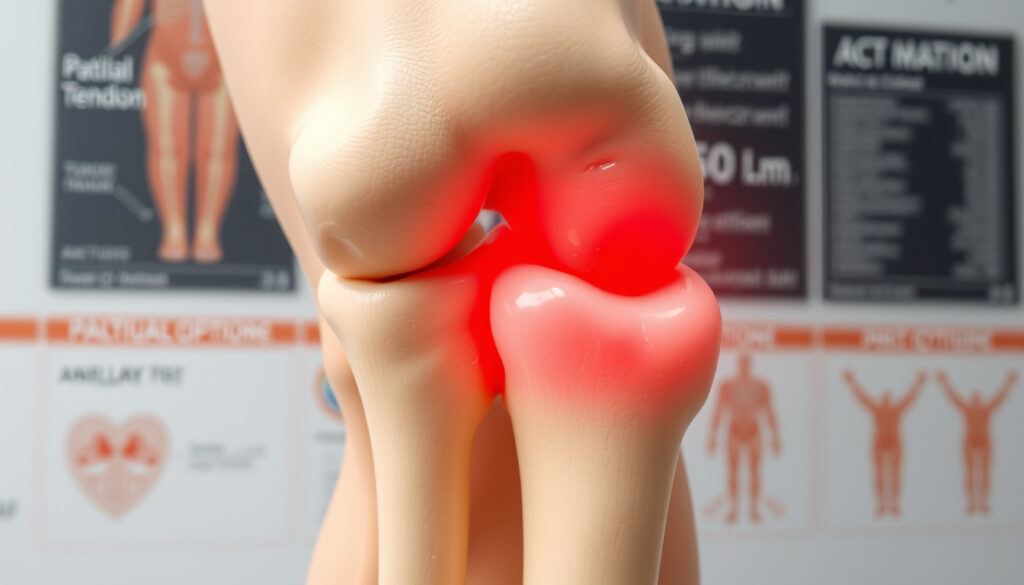
Osgood-Schlatter Disease: Causes, Treatment & Recovery
If your child limps off the field after practice, clutching a tender spot below the kneecap, it’s natural to think the worst. But for many active adolescents, that sore bump is Osgood-Schlatter disease — a common overuse injury that usually resolves on its own.
Common age range: 10 to 15 years ·
Gender ratio: Boys affected twice as often as girls ·
Typical recovery time: 6 to 12 months ·
Incidence in adolescent athletes: Approximately 10% experience symptoms
Quick snapshot
- Common cause of knee pain in growing adolescents (NIH)
- Irritation of the patellar tendon at the shinbone (StatPearls)
- Usually harmless and self-limiting (NIH) (NIH)
- Painful bump below the kneecap (Cleveland Clinic)
- Swelling and tenderness (Cleveland Clinic) (Cleveland Clinic)
- Worse with activity, better with rest (Cambridge University Hospitals NHS)
- Rest and ice (Cleveland Clinic)
- Activity modification (StatPearls)
- Stretching exercises (Cambridge University Hospitals NHS)
- Surgery rarely needed (NIH)
- Resolves in 6-12 months (NIH) (Gloucestershire Health and Care NHS)
- No permanent damage typically (NIH) (Gloucestershire Health and Care NHS)
- Rarely leads to disability (Gloucestershire Health and Care NHS)
Five key facts at a glance: the pattern is that Osgood-Schlatter is overwhelmingly a condition of active adolescents with a predictable course.
| Fact | Detail |
|---|---|
| Age range | 10-15 years |
| Common symptom | Painful bump below kneecap |
| Primary cause | Overuse of quadriceps during growth spurts |
| Treatment | Conservative: rest, ice, activity modification |
| Typical duration | 6-12 months |
The pattern: these five facts point to a single story — repetitive stress on a growing attachment point, usually reversible with time and modified activity.
What causes Osgood-Schlatter disease?
During growth spurts, the quadriceps muscle tightens, pulling on the patellar tendon where it attaches to the tibial tuberosity — the bony bump below the kneecap. Repeated stress from running, jumping, and squatting irritates that attachment point, causing inflammation and pain.
- Overuse of the quadriceps during growth spurts (NIH)
- Irritation of the patellar tendon at the tibial tuberosity (StatPearls)
- Most common in active adolescents, especially those who play sports involving jumping and running (Cleveland Clinic)
Is Osgood-Schlatter inherited?
The exact role of genetics is not fully understood. While the condition often runs in families, no specific gene has been identified. The NIH notes that a family history of Osgood-Schlatter may increase risk, but environmental factors — sport type, activity level, growth rate — appear to play a larger role.
The implication: Osgood-Schlatter is a mechanical problem, not a disease. Active kids who love high-impact sports are the primary target, and the cause is straightforward — too much load on a growing attachment point.
How to confirm Osgood-Schlatter?
Doctors typically diagnose Osgood-Schlatter disease based on symptoms and a physical exam. They look for tenderness and swelling over the tibial tuberosity, and pain when the knee is extended against resistance.
- Physical exam reveals a tender bump below the kneecap (Cleveland Clinic)
- X-ray may show irregularity or fragmentation of the tibial tuberosity (NIH)
- Rarely requires MRI; imaging is used only when the diagnosis is uncertain (NIH)
- Differential diagnosis includes patellar tendinitis, Sinding-Larsen-Johansson syndrome, fracture, and infection (StatPearls)
What is mistaken for Osgood-Schlatter?
Several conditions can mimic Osgood-Schlatter disease. The most common is patellar tendinitis (jumper’s knee), which involves pain in the patellar tendon itself rather than the bony attachment. Sinding-Larsen-Johansson syndrome affects the lower pole of the kneecap rather than the tibial tuberosity. According to NIH, imaging helps distinguish these, especially when symptoms are severe or atypical.
Because multiple knee conditions share similar symptoms, a proper diagnosis is essential. An X-ray can rule out more serious causes like fracture or tumor, but for most kids, the clinical exam is enough.
What this means: A straightforward diagnosis with a high degree of accuracy when the classic signs are present. Parents can feel confident in a clinical diagnosis without rushing to imaging.
What are the treatment options for Osgood-Schlatter’s disease?
Treatment is almost always conservative. The goal is to reduce pain and inflammation while allowing the growth plate to mature. Most children respond well to simple measures.
- Conservative treatment: rest, ice, compression, elevation (Cambridge University Hospitals NHS)
- Activity modification based on pain level (StatPearls)
- Stretching exercises, especially quadriceps stretching (Cleveland Clinic)
- Surgery rarely needed; only in persistent cases after skeletal maturity (NIH)
- Most cases resolve with time (NIH)
How is Osgood-Schlatter disease treated in children?
For children, the approach is even more conservative. The Gloucestershire Health and Care NHS emphasizes a balance of rest and exercise. Ice is applied for 10-15 minutes several times a day. Over-the-counter pain relievers like ibuprofen can help, but should be used sparingly and under a doctor’s guidance.
Do you have to get surgery for Osgood-Schlatter disease?
In the vast majority of cases, no. Surgery is reserved for the minority of patients who have persistent pain after the growth plate closes, typically in adulthood. According to a review (NIH), only about 5-10% of patients require surgical intervention. The procedure involves removing the ossicle (bony fragment) and reattaching the tendon.
What exercises should I avoid if I have Osgood-Schlatter disease?
High-impact activities that involve deep knee bending, jumping, and running should be avoided during flare-ups. Examples include basketball, volleyball, sprinting, and squats. Low-impact alternatives like swimming, cycling, and walking are recommended by Cambridge University Hospitals NHS.
For a young athlete, sitting out may feel like a punishment. But short-term activity modification prevents long-term pain and ensures a faster return to sport. The trade-off is worth it.
The pattern: Conservative management works for nearly everyone. Surgery is the exception, not the rule. The challenge is keeping active kids still long enough to heal.
What happens if you ignore Osgood-Schlatter disease?
Ignoring the pain and continuing high-impact activities can prolong symptoms and may lead to a more prominent bony bump. However, the condition does not typically cause permanent joint damage or disability.
- Ignoring can lead to persistent pain (StatPearls)
- Rarely causes permanent damage (NIH)
- May worsen the bump below the kneecap (Cleveland Clinic)
- Does not typically cause disability (Gloucestershire Health and Care NHS)
Does Osgood-Schlatter count as a disability?
Osgood-Schlatter disease is generally not considered a disability. Most cases resolve completely without long-term functional limitations. According to Cambridge University Hospitals NHS, the condition is self-limiting and rarely interferes with daily activities after recovery. However, if symptoms persist into adulthood and cause chronic pain, it may affect work or sports participation, but it rarely qualifies for disability benefits.
The trade-off: A few weeks of rest now vs. months of lingering pain. The choice is clear.
Can Osgood-Schlatter go away?
Yes, in the vast majority of cases. Osgood-Schlatter disease is a self-limiting condition that resolves on its own as the skeleton matures. The growth plate at the tibial tuberosity fuses, and the tension on the patellar tendon decreases.
- Self-limiting condition (NIH)
- Symptoms usually resolve within 6-12 months (StatPearls)
- May persist until growth plate closes (NIH)
- Recurrence possible with activity (Gloucestershire Health and Care NHS)
How long does it typically take for someone to recover from Osgood-Schlatter’s disease?
Recovery time varies. Most adolescents feel significant improvement within 6 months, and full resolution by 12-18 months. A 2026 systematic review (NIH) found that nonoperative treatments led to full recovery of daily activities in 14.3% to 100% of cases across studies, highlighting the wide range of outcomes. Active children often return to sports sooner once pain subsides, but the underlying irritation may persist until growth is complete.
For most kids, Osgood-Schlatter is a temporary inconvenience, not a lifelong problem. The key is patience: pushing through pain only extends the timeline.
The pattern: Osgood-Schlatter follows the growth plate. Once the bone stops growing, the pain stops. Recovery is a matter of time, not treatment.
Clarity
Confirmed facts
- Osgood-Schlatter is self-limiting (NIH)
- Caused by repeated stress on patellar tendon at tibial tuberosity (StatPearls)
- Most common in active adolescents (Cleveland Clinic)
What’s unclear
- Exact prevalence in different populations (NIH notes limited epidemiological data)
- Long-term effects in adults who had it as children (NIH mentions recurrence in adulthood but not well-studied)
- Role of genetic predisposition (StatPearls states family history is a risk factor but mechanism unclear)
“Osgood-Schlatter disease is usually diagnosed clinically from symptoms and physical examination rather than by routine imaging.”
Osgood-Schlatter Disease: Appearance, Diagnosis and Treatment (NIH)
“The condition is generally self-limited and typically resolves with skeletal maturity.”
Osgood-Schlatter Disease: Appearance, Diagnosis and Treatment (NIH)
“Over-the-counter NSAIDs such as ibuprofen or naproxen are used for pain and swelling relief in pediatric patients.”
Cleveland Clinic
Osgood-Schlatter disease is a common, manageable condition that nearly always gets better on its own. For parents, the real challenge is not the diagnosis or the treatment — it’s convincing a young athlete to take a break. The evidence is clear: rest, ice, and smart activity choices are the path to recovery. Push through the pain, and you risk a longer recovery. For the active adolescent, the choice is between a few weeks of low-impact activities and months of limping. For the active adolescent, the smart play is to back off early — that choice shortens recovery and protects the knee.
playstretchquest.com, ortopediaevolutiva.com, pmc.ncbi.nlm.nih.gov, uhd.nhs.uk, medi-dyne.com, fhft.nhs.uk, droracle.ai
Frequently asked questions
Can adults get Osgood-Schlatter disease?
Yes, but it is rare. Most adults who experience symptoms had the condition as adolescents and may have a persistent bony bump. New cases in adults are uncommon and usually related to overuse.
What are the symptoms of Osgood-Schlatter disease?
The main symptom is a painful, swollen bump below the kneecap. Pain worsens with activities like running, jumping, and kneeling, and improves with rest.
Is Osgood-Schlatter disease painful?
Yes, it can be painful, especially during and after physical activity. The pain is typically localized to the tibial tuberosity and may be sharp or aching.
Can Osgood-Schlatter disease cause permanent knee damage?
No, permanent damage is extremely rare. The condition does not affect the knee joint itself. The bony bump may remain, but it is usually painless and does not impair function.
What sports are risky for Osgood-Schlatter disease?
Sports that involve repetitive jumping, running, and deep knee bending — such as basketball, volleyball, soccer, gymnastics, and track — are associated with higher risk.
Does Osgood-Schlatter disease require a doctor’s visit?
Yes, it’s a good idea to see a doctor to confirm the diagnosis and rule out other causes of knee pain. A physical exam is usually sufficient.
Can Osgood-Schlatter disease recur after recovery?
Yes, recurrence is possible, especially if the individual returns to high-impact activities before full healing. Once the growth plate closes, recurrence is less likely.
Are there any long-term complications of Osgood-Schlatter disease?
Long-term complications are rare. Some adults may have a tender bump or mild discomfort when kneeling, but serious issues are uncommon.
Related reading
- Exercises for Lower Back Pain: McGill Big 3 & Walking Tips — Exercise guidance for managing musculoskeletal pain
- Gastroesophageal Reflux Disease Symptoms: Complete Guide — Health condition guide
Both guides pair well with the Osgood-Schlatter information above: one covers exercise-based pain management, and the other walks through a common health condition from symptoms to relief.
More related posts
 A League of Their Own Cast: Stars, Stories & Legacy
 How Many Calories in a Banana? Sizes & Nutrition Facts
 Kim Kardashian Net Worth (2026): $1.9 Billion from Skims & TV
 The Karate Kid 2 Film – Plot, Cast, Box Office and Legacy
 When Is Saint Patrick’s Day? Date, History & Celebration Guide
 Knicks vs Celtics Timeline: Key Games and Record
 Lexus IS 350 F Sport Review: Specs, Problems, Best Years
 Massage Envy Near Me: Tipping, Prices & Cancellation