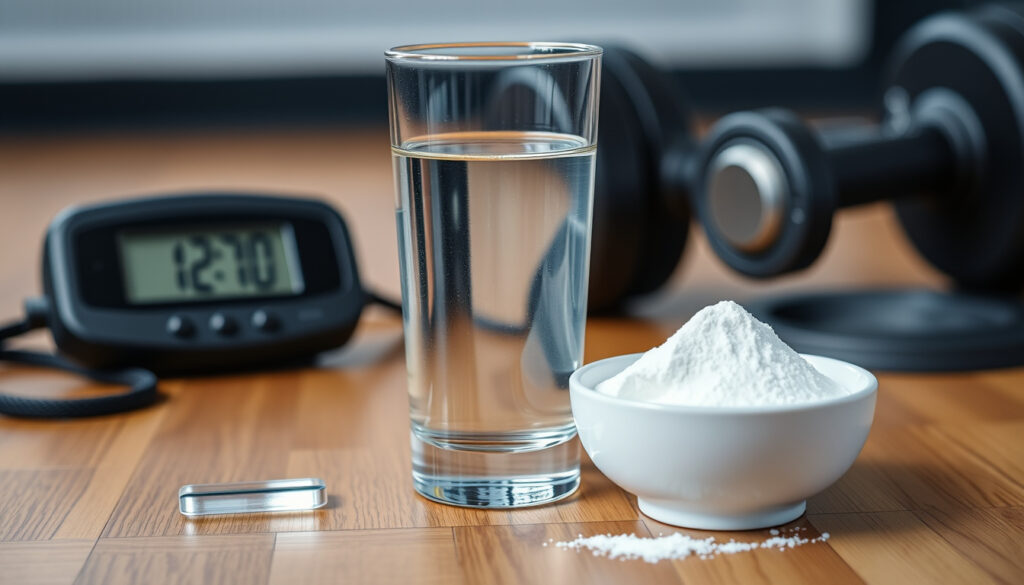
Creatine Before or After Workout: Timing & Facts
You’ve probably heard that creatine is one of the most researched supplements out there. But if you’re wondering whether to take it before or after your workout, you’re not alone—it’s a question that splits gym-goers and even researchers. A 2013 study found that 5 grams of creatine monohydrate taken immediately after exercise produced greater body-composition improvements than pre-workout ingestion (PubMed study on pre vs post supplementation). The answer, as it turns out, is less about perfect timing and more about showing up every day.
Most studied form: Creatine monohydrate used in 90%+ of research ·
Standard daily dose: 3–5 grams ·
Initial weight gain: 2–6 lbs of water weight in first week ·
Post-workout superiority: 2013 study suggests immediate post-workout may be superior for body composition
Quick snapshot
- Creatine increases muscle phosphocreatine stores (PMC review)
- Safe for healthy adults at 3–5 g/day (Frontiers review)
- Post-workout timing may be slightly better for body composition (PubMed study)
- Exact optimal timing for every individual (PMC review)
- Long-term effects beyond 5 years (no studies exist) (PMC review)
- Effect on fat loss without concurrent exercise (Health.com)
- Muscle creatine stores saturate in 2–4 weeks at 5 g/day without loading (PMC review)
- Focus on consistency — take creatine daily, regardless of timing (Health.com)
Five facts about creatine, from daily production to the weight gain you might notice.
| Fact | Value |
|---|---|
| Daily production | Body produces ~1 gram of creatine per day |
| Dietary sources | Red meat, fish (e.g., 1 lb beef provides ~2 g) |
| Effect on performance | Improves high‑intensity exercise by 10–20% (PMC review) |
| Saturation time | 2–4 weeks at 5 g/day without loading |
| Water retention | 2–6 lbs in first week typical |
Which is the best time to take creatine?
Post-workout vs pre-workout: what the research says
- Post-workout edge: A 2013 study found that 5 g of creatine monohydrate taken immediately after resistance training led to greater increases in fat-free mass and strength compared to pre-workout ingestion (PubMed study).
- Pre-workout also works: A 2022 review in Frontiers in Sports and Active Living concluded that taking creatine immediately before or after resistance training are both viable strategies to augment muscle mass and performance (Frontiers review).
- Methodological limits: The same 2021 review noted that while emerging evidence suggests post-exercise may be better, methodological limitations prevent solid conclusions (PMC review).
Post-workout creatine appears to have a slight edge, but both timings work. The difference is small enough that you shouldn’t lose sleep over it.
Does timing really matter?
- The 2021 PMC review explicitly states that “adapting creatine supplementation to the exact time of training is not supported by solid evidence and should not be considered a major concern” (PMC review).
- The NSCA’s Personal Training Quarterly says there does not seem to be a clear advantage to pre- versus post-exercise creatine supplementation based on current evidence (NSCA PDF).
- Examine.com, a respected supplement database, notes that several studies found no significant differences between taking creatine before or after workouts (Examine creatine summary).
The pattern: the research is split, but the consensus leans toward “timing is a minor detail.”
Do and don’ts with creatine?
What should you never mix with creatine?
- Avoid alcohol and diuretics: Alcohol can impair hydration and creatine uptake; diuretics increase dehydration risk. The NSCA suggests creatine may be taken before, during, or after a workout, but not with alcohol (NSCA PDF).
- Don’t exceed recommended doses: The 2022 Frontiers review found doses of 5–9 g per day for up to 32 weeks were well tolerated, but higher doses increase risk of GI upset (Frontiers review).
Can you take creatine with caffeine?
- Common concern: some worry caffeine reduces creatine’s effectiveness. However, the evidence is mixed. A 2018 review found no consistent negative interaction (PMC review on timing and dose).
- Practical tip: if you take both, no need to space them—just be mindful of total caffeine intake.
Is it safe to take creatine long-term?
- Yes, for healthy individuals. The 2022 Frontiers review reported no adverse events in studies lasting up to 32 weeks (Frontiers review).
- Long-term safety beyond 5 years hasn’t been studied, but decades of use without major reported issues suggest a strong safety profile.
- If you have kidney issues, consult a doctor before starting.
What this means: creatine is remarkably safe when used as directed. The real risks come from mixing it with substances that stress the kidneys or from ignoring pre-existing conditions.
Why did I gain 10 pounds after taking creatine?
Is the weight gain from water retention?
- Yes, the initial weight gain is primarily water stored in your muscles. Creatine draws water into muscle cells, increasing intracellular fluid volume. A gain of 2–6 lbs in the first week is typical (Healthline).
- This is not fat gain. It reflects increased creatine stores and the associated water. The NSCA notes that this water weight is intramuscular and actually contributes to muscle fullness and pump (NSCA PDF).
How long does the weight gain last?
- The water weight stays as long as you maintain creatine stores. If you stop taking creatine, the extra water leaves within a few weeks.
- After the initial saturation phase (2–4 weeks), weight stabilizes. Any further gains are likely from actual muscle growth if you’re training.
That sudden 5-pound jump on the scale can be alarming, but it’s a sign creatine is working—your muscles are loading up. Don’t panic; it’s water, not fat.
Is creatine bad for belly fat?
Does creatine cause belly fat?
- No. Creatine does not directly cause belly fat. The mechanism of water retention is in muscles, not in abdominal fat tissue. A 2021 review found no evidence linking creatine to increased body fat (PMC review).
- The temporary bloated feeling some people report is due to water in the gut or muscles, not fat accumulation.
Can creatine help with fat loss?
- Some studies suggest creatine may support fat loss when combined with resistance training. The 2013 study found that post-workout creatine improved body composition (more lean mass, less fat) over pre-workout (PubMed study).
- However, creatine is not a fat burner. Its primary role is improving exercise performance, which can indirectly help with fat loss if you train harder.
The trade-off: you might see a temporary increase in scale weight, but that’s not belly fat. If you’re in a calorie deficit and training, creatine can actually help preserve muscle while losing fat.
What happens after 1 month of creatine?
What are the signs creatine is working?
- Increased strength: You’ll likely notice you can lift heavier or do more reps in the first few weeks.
- Muscle pump: A visible pump during workouts is a common sign—creatine increases water content in muscles, making them look fuller.
- Weight gain: As noted, 2–6 lbs of water weight is normal.
- After 1 month, muscle creatine stores are saturated. Your performance gains should plateau or continue modestly with training progress.
Does creatine give you a pump?
- Yes, it enhances the pump by increasing intracellular water volume. This is a direct effect of creatine’s osmotic action (Examine.com).
What are the long-term effects?
- For healthy adults, long-term use (years) appears safe. No adverse events were reported in studies up to 32 weeks (Frontiers review).
- Some users report mild GI issues, especially with loading doses. Taking creatine with food can help.
- There is no evidence that creatine causes hair loss, kidney damage in healthy individuals, or other serious side effects when taken at recommended doses.
The implication: after a month, you’re fully loaded. The benefits remain as long as you keep taking it, and the risks are minimal for most people.
Pre-workout vs post-workout: a comparison
Three factors, one pattern: both timings work, but post-workout may have a slight edge in body composition changes.
| Factor | Pre-workout | Post-workout |
|---|---|---|
| Effectiveness for muscle gain | Effective (increases muscle mass and strength) | May be slightly superior (PubMed study) |
| Research support | Several studies show benefits | Several studies show benefits, with a few favoring post-workout |
| Convenience | Easy to mix in pre-workout drink | Easy to mix in post-workout shake |
| Risk of GI upset | Possible if taken on empty stomach | Less likely if taken with food |
The catch: the difference is small. The 2022 Frontiers review concluded that current research does not support a timed creatine prescription relative to long-term training (Frontiers review).
Pros and cons of creatine supplementation
Upsides
- Improves high‑intensity exercise performance by 10–20% (PMC review)
- Increases muscle mass and strength when combined with resistance training (PubMed study)
- Well-tolerated at 3–5 g/day for most healthy adults (Frontiers review)
- Enhances muscle pump and fullness
- May support cognitive function in some contexts (Examine.com)
Downsides
- Initial water weight gain (2–6 lbs) can be alarming (Healthline)
- Possible GI discomfort, especially with high doses or on empty stomach
- Not suitable for people with kidney disease (consult a doctor)
- Requires daily intake for sustained benefits
- Some users report mild bloating
How to take creatine: a step-by-step guide
- Choose the right form: Creatine monohydrate is the most researched and cost-effective. The 2022 Frontiers review confirms it’s safe and effective (Frontiers review).
- Decide on a loading phase (optional): Take 20 g per day (split into 4 doses of 5 g) for 5–7 days to saturate quickly. Then switch to 3–5 g/day maintenance.
- Or skip loading: Take 3–5 g daily. Saturation takes 2–4 weeks, but it’s equally effective long-term.
- Pick a time that works for you: The NSCA suggests taking it within 1–2 hours of your workout (NSCA PDF). But if you prefer mornings, that’s fine—consistency is key.
- Mix with a carbohydrate source (optional): Some evidence suggests that taking creatine with carbs can improve uptake, but it’s not necessary (Examine.com).
- Stay hydrated: Drink extra water to help with creatine’s osmotic effects.
What we know for sure vs. what remains uncertain
Confirmed facts
- Creatine increases muscle phosphocreatine stores (PMC review)
- Safe for healthy adults at 3–5 g/day (Frontiers review)
- Post-workout timing may be slightly better (Antonio 2013) (PubMed study)
What’s unclear
- Exact optimal timing for every individual (PMC review)
- Long-term effects beyond 5 years
- Effect on fat loss without concurrent exercise (Health.com)
“Consuming creatine immediately post-workout is superior to pre-workout vis a vis body composition and strength.”
— Dr. Jose Antonio, lead author of the 2013 study (PubMed study)
“Adapting creatine supplementation to the exact time of training is not supported by solid evidence and should not be considered a major concern.”
— 2021 review in Nutrients (PMC review)
For the average gym-goer, the choice is clear: take your 5 grams daily, and don’t stress over the clock. Your muscles will thank you either way.
droracle.ai, journalofexerciseandnutrition.com, myprotein.com, medicalnewstoday.com, pmc.ncbi.nlm.nih.gov
Frequently Asked Questions
Can I take creatine with protein powder?
Yes, creatine and protein powder can be mixed together. There’s no known negative interaction. Many people add creatine to their post-workout shake.
Is creatine safe for teenagers?
Creatine is generally considered safe for teenagers when used appropriately, but it’s recommended to consult a healthcare provider first. Most research has been done on adults.
Should I cycle creatine?
No evidence supports cycling creatine. The 2022 review found no need to cycle; you can take it continuously without losing effectiveness.
How much water should I drink with creatine?
Drink extra water to stay hydrated, as creatine draws water into muscles. Aim for at least 8–10 glasses of water per day, more if you exercise.
Does creatine cause hair loss?
The evidence is mixed. Some studies suggest a potential link in men with a genetic predisposition, but most research does not show a strong connection. It’s not a common side effect.
Can creatine help with endurance sports?
Creatine primarily benefits high-intensity, short-duration activities (like sprinting or weightlifting). For endurance sports, the benefits are less clear, but it may help with repeated sprints.
What is the best form of creatine?
Creatine monohydrate is the most studied, safest, and cheapest form. Other forms (like HCl or ethyl ester) have no proven advantages over monohydrate.
More related posts
 Find My Device Google: How to Locate, Secure, or Erase Your Android
 Ohio State University: Rankings, Name Facts & Trademark
 Ravens vs Dolphins Match Player Stats – 2025 Recap
 Did Dolly Parton Die? Debunking the Death Hoax
 Where Does JD Vance Live? Official Residence & Ohio Home
 T-Mobile Pay Bill: Online, Phone & Guest Pay Guide
 Addison’s Disease in Dogs – Symptoms, Diagnosis & Treatment
 How Many Gigabyte in a Terabyte? (1000 v 1024 GB)