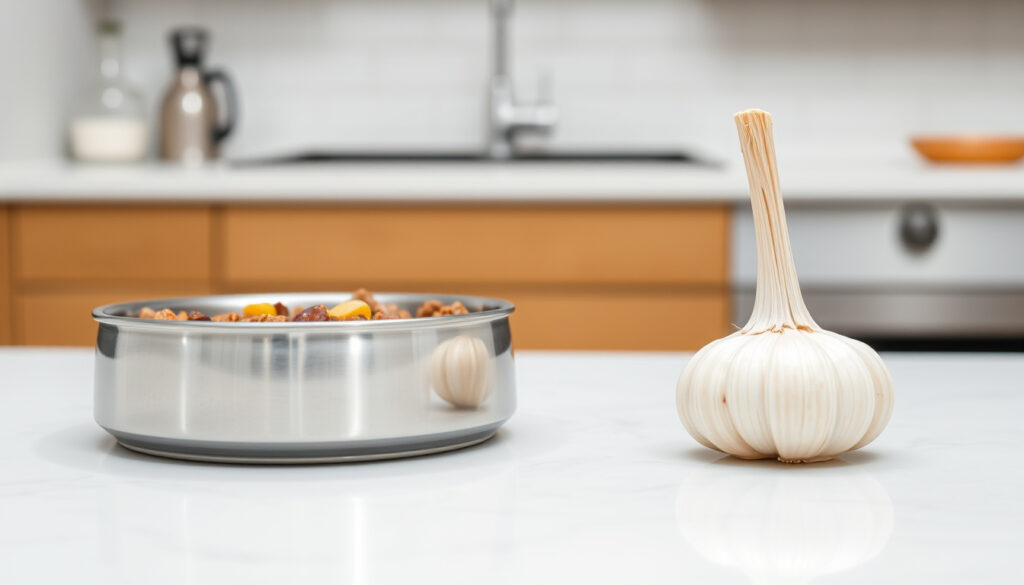
Can Dogs Have Garlic? Toxicity, Dose, and What to Do
You probably landed here because a piece of garlic bread hit the kitchen floor — or because your dog helped themselves to a plate of garlic chicken the moment you turned your back. It’s one of those everyday kitchen dramas that turns into a flurry of worried searches, and the answer matters: garlic is toxic to dogs, according to the ASPCA’s toxic plant database. The good news is that a single small crumb is unlikely to cause a serious poisoning — the danger zone starts when a dog actually eats a meaningful amount of garlic.
Toxic compound: Thiosulfates · Harmful range (research-cited): ~15–30 g per kg of body weight · Typical onset: 24–72 hours · Antidote? No — call pet poison control
Confirmed Facts
These are the numbers and rules worth saving to your phone before you need them:
| Can dogs eat garlic? | No — garlic is considered toxic to dogs in any form. |
| What makes it toxic? | Thiosulfate compounds (including n-propyl disulfide) that damage red blood cells. |
| Typical onset | Usually 24–72 hours after the garlic was eaten. |
| Primary threat | Oxidative damage to red blood cells → hemolytic anemia. |
| Is there an antidote? | No specific antidote; prompt veterinary support is the treatment. |
| Does cooking help? | No — cooking does not eliminate the toxic compounds. |
Garlic is considered toxic to dogs per ASPCA toxic plant guidance.
No safe treat dose exists; harmful blood changes cluster near 15–30 g/kg — but even small amounts can cause GI upset in sensitive dogs.
Classic anemia signs typically appear 24–72 hours later; GI signs may show up earlier.
Call your vet or pet poison control promptly — don’t wait for symptoms.
Can Dogs Have Garlic?
No — dogs should never be given garlic, in any form. The ASPCA’s toxic plant database lists garlic (Allium sativum) as toxic to dogs, along with its Allium relatives like onions and chives.
The problem is chemistry: garlic contains thiosulfate compounds that a dog’s red blood cells can’t handle. In sufficient amounts, those compounds trigger oxidative damage that breaks red blood cells down — a condition called hemolytic anemia.
- Raw cloves — most concentrated in a single bite.
- Cooked garlic — same toxicity; cooking doesn’t neutralize it.
- Powdered seasonings — often several times more concentrated by weight.
- Garlic butter or oil — high fat + garlic; a double no.
- Supplements — still garlic, still problems.
“Garlic is considered toxic to dogs.”
— ASPCA Animal Poison Control (toxic plant database)
Size changes the math: a small dog can cross a clinically significant dose with a fraction of the garlic it takes a large dog. That’s why “the other dog ate it and he’s fine” is not a reliable gauge.
The implication: any amount of garlic carries some risk, and no form is safe to feed deliberately.
How Much Garlic Is Toxic to a 50lb Dog?
There is no established “safe” garlic dose for dogs, and veterinary toxicology references keep the math conservative. The American Kennel Club, citing veterinary studies, reports that roughly 15–30 grams of garlic per kilogram of body weight can produce harmful changes in a dog’s red blood cells.
To put that in kitchen terms, run the arithmetic across a few typical body weights:
| Dog weight | Approx. harmful range (15–30 g/kg) |
| 10 lb (4.5 kg) | 68–136 g of garlic |
| 30 lb (13.6 kg) | 204–408 g of garlic |
| 60 lb (27.2 kg) | 408–816 g of garlic |
“Garlic” here means the fresh or cooked bulb — dehydrated powder is several times more concentrated per gram.
That’s well above a crumb of garlic bread — but it does not mean smaller amounts are harmless. The research-cited range describes when measurable anemia signs are consistently seen; stomach upset can happen below that line, and some dogs react at much lower doses. That’s the same “individual sensitivity” caveat you’ll hear from veterinary hospital toxicology teams.
The pattern: the threshold for red blood cell damage is high, but GI upset can occur at far lower amounts, so any ingestion beyond a crumb merits a call.
Garlic Powder, Oil, and Supplements — Same Risk, Same Rule
Fresh garlic is mostly water. Dehydrated garlic powder and granules are several times more concentrated by weight, so a pinch of powder reads like a much larger piece of garlic in the toxic math. Garlic oil is also toxic and should never be given to dogs — a rule that extends to store-bought garlic supplements marketed for pets.
Cooking and processing don’t neutralize thiosulfates. That’s the reason the “it was just a little garlic in the broth” logic doesn’t hold up in the dog bowl.
- Powder — higher dose per gram than fresh.
- Oil — same active compounds, very concentrated.
- Boiled or roasted — same toxicity, not neutralized by heat.
- Pet supplements — not a recognized safety route; skip them.
What this means: always treat powder, oil, and supplements with the same caution as fresh garlic — concentration can be deceptive.
What Are the Symptoms of Garlic Poisoning in Dogs?
The biggest surprise is the timeline. The classic red-blood-cell effects of thiosulfate poisoning typically surface 24 to 72 hours after the garlic was eaten, so a dog who looks fine at dinner can still be in trouble two days later. GI signs like drooling, nausea, vomiting, and diarrhea can show up earlier, per veterinary toxicology references.
- At the meal: some dogs drool or gag from the taste — not a poisoning sign on its own.
- First 24 hours: GI upset — vomiting, diarrhea, loss of appetite.
- 24–72 hours: anemia signs — pale gums, lethargy, rapid breathing, red or brown urine.
- Later: weakness, jaundice (yellowish gums), collapse in severe cases. Bloodwork can also reveal Heinz bodies, the microscopic sign of oxidative damage.
The catch: the delay makes it easy to miss the connection, so always mark the calendar when garlic is eaten.
What Should I Do If My Dog Ate Garlic?
Act on the calendar, not the dog. Because the most serious signs can lag, the treatment clock starts when the garlic was eaten — not when the first symptom appears.
- Figure out the details. What form (fresh, powder, oil), approximately how much, when, and your dog’s weight.
- Call a professional. Either your vet or poison control; they’ll assign a risk level instead of you guessing.
- Do not induce vomiting unless a vet explicitly tells you to — at-home tricks can cause more harm.
- Don’t try home remedies. Milk, yogurt, or “wait and see” won’t neutralize thiosulfates.
- Keep evidence: packaging, photos, and rough amounts help the vet decide between decontamination and bloodwork.
“Do not induce vomiting unless a veterinarian specifically instructs you to.”
— Pet Poison Helpline, first-aid guidance
And if the exposure was leftover chicken that had been cooked with garlic, don’t forget the pan: bits of onion, powder, and butter in the same bowl are all separate points of exposure.
The implication: a quick call is the single most effective step you can take, and waiting for symptoms can cost time and money.
Can Dogs Have Onion and Other Allium Foods?
Garlic isn’t the only member of the Allium family that lands dogs in the emergency room. Onions, leeks, chives, and shallots follow the same chemistry and belong on the same “do not feed” list, per ASPCA toxic plant guidance.
In practice, onions are the more common call because they show up everywhere: spice rubs, gravies, soups, and “natural flavor” preparations. That’s why a leftover bite that looks plain can still secretly carry the risk.
The pattern: all Allium plants share the same toxic mechanism, so the rule applies uniformly across the family.
Rumor vs. Fact: Garlic Safety Myths
Some dog-health folklore is so sticky it deserves a full myth-busting table:
| Rumor | Fact |
| “Garlic is fine once it’s cooked.” | False — cooking doesn’t eliminate toxic thiosulfates. |
| “The 10-minute rule makes garlic safe.” | False — no prep-based trick is recognized by veterinary toxicology guidance. |
| “A tiny bit is always harmless.” | False — any amount can cause GI upset, and some dogs react at lower doses. |
| “If he’s fine in 2 hours, we’re fine.” | False — classic signs typically appear 24–72 hours later. |
The catch: individual sensitivity makes it impossible to declare a “safe” dose for every dog.
What the Sources Actually Say
“Garlic is considered toxic to dogs.”
— ASPCA Animal Poison Control, toxic plant database
“Scientific studies have found approximately 15–30 grams of garlic per kilogram of body weight can produce harmful changes in a dog’s red blood cells.”
— American Kennel Club, summarizing veterinary research
“Gastrointestinal upset can occur with potentially any amount ingested, while larger amounts may cause red blood cell damage.”
— VCA Animal Hospitals, veterinary hospital network
What this means: every reliable source agrees on the core message, so there is no scientific controversy.
The Bottom Line
Keep garlic — in any form — in your kitchen and out of the dog bowl. If your dog does eat it, don’t wait for symptoms and don’t play toxicologist: call your vet or pet poison control with the details, let them do the math, and let the 24–72 hour window do its job while you watch.
Owners who act quickly by calling their vet rather than waiting for symptoms give their dog the best chance of a safe recovery.
aspca.org, aspca.org, merckvetmanual.com, petmd.com, aspca.org, vetmeds.org, aspcapetinsurance.com, aspcapetinsurance.com, pmc.ncbi.nlm.nih.gov, akc.org, aercmn.com, vcahospitals.com
Frequently Asked Questions
Can dogs eat a tiny bit of garlic?
No — there is no established safe treat dose. Even small amounts can cause GI upset in sensitive dogs, and the risk of harmful blood changes is real.
How much garlic is toxic to a dog?
Veterinary research cited by the AKC flags roughly 15–30 g per kg of body weight for harmful red-blood-cell changes — but stomach upset can occur below that threshold.
Is garlic powder toxic to dogs?
Yes — powder is several times more concentrated than fresh garlic by weight, and cooking doesn’t neutralize it.
Are onions toxic to dogs too?
Yes — onions, leeks, chives, and shallots belong to the same Allium family and carry the same toxicity mechanism.
How long after eating garlic will symptoms appear?
Usually 24 to 72 hours for the classic anemia signs; milder GI signs like vomiting or diarrhea can show up earlier.
More related posts
 King of New York (1990): Controversy, Cast & Streaming Guide
 What Is a CD? Certificate of Deposit Explained (2025)
 How Many Weeks in a School Year? Average Range Is 36–40
 UEFA Euro Qualifiers Standings 2026: Tables & Groups
 Imagine Credit Card Login – Official Guide to Secure Access
 How Old Is Demi Moore? Age, Plastic Surgery, Marriages & More
 Can Dogs Eat Mango Safely? Benefits, Risks & Vet Tips
 Grand Theft Auto 6: 2026 Release Date, Price & Cost