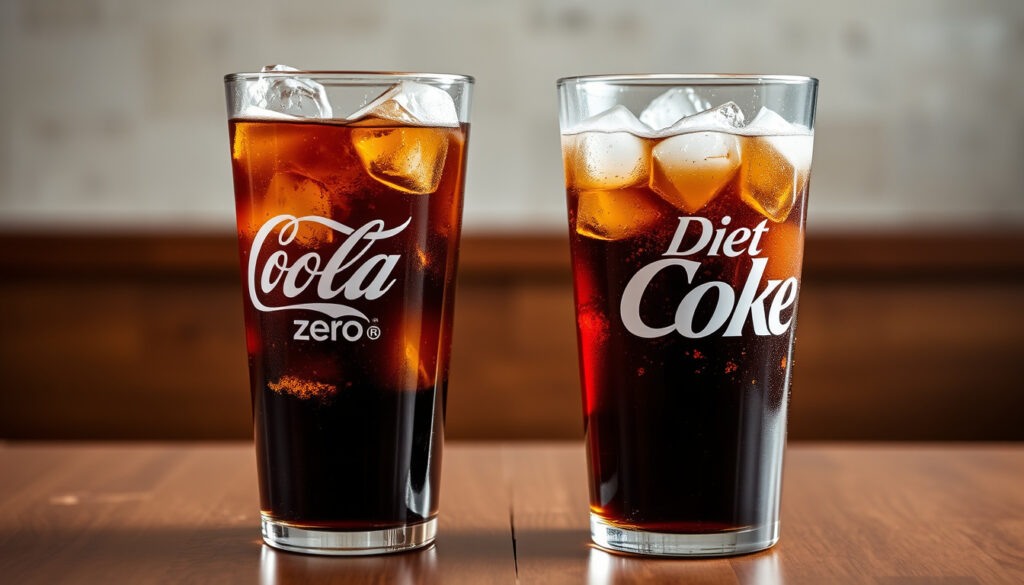
Coke Zero vs Diet Coke: Which Is Better? A Comparison
Diet Coke and Coke Zero both have zero calories and zero sugar, but their sweetener blends and caffeine levels make them different drinks in practice. The real choice comes down to taste preference and how much caffeine you want.
Coke Zero vs Diet Coke: A Complete Side-by-Side Comparison
Coke Zero vs Diet Coke: 0 calories in both · Coke Zero: 34 mg caffeine, aspartame + Ace-K · Diet Coke: 46 mg caffeine, aspartame only.
Quick snapshot
Coke Zero
- Formulation: aspartame plus acesulfame potassium, 0 calories, 0 g sugar. (Healthline’s nutrition comparison)
Diet Coke
- Formulation: aspartame only, 0 calories, 0 g sugar. (Taste of Home’s comparison)
Shared base
- Both use artificial sweeteners instead of sugar, which avoids the glucose spike of regular cola. (Healthline’s keto explainer)
Decision factor
- Flavor preference and caffeine tolerance matter more than a major health gap. (Eat This, Not That!’s review)
The snapshot shows the practical differences at a glance.
The side-by-side table below lines up the figures that matter for a Coke Zero vs Diet Coke decision.
| Attribute | Coke Zero | Diet Coke |
|---|---|---|
| Calories (12 oz) | 0 | 0 |
| Sugar (12 oz) | 0 g | 0 g |
| Caffeine (12 oz) | 34 mg | 46 mg |
| Primary sweeteners | Aspartame + acesulfame potassium | Aspartame |
| Flavor target | Closer to original Coca-Cola | Lighter, citrusy profile |
| Bottom-line health signal | No clear winner | No clear winner |
For a complete ingredient snapshot, the spec table adds the context that often gets left out of diet-soda arguments.
| Introduced | Coke Zero: 2005; Diet Coke: 1982 |
| Sweetener blend | Coke Zero: aspartame + Ace-K; Diet Coke: aspartame only |
| Caffeine per 12 oz | Coke Zero: 34 mg; Diet Coke: 46 mg |
| Calories | 0 for both |
| Sugar | 0 g for both |
| Phosphoric acid | Present in both |
| pH level | Approximately 2.5–3.5 for both |
| Standard U.S. sweetener status | FDA-approved artificial sweeteners in both |
Which is healthier, Coke Zero or Diet Coke?
Nutritional comparison
At the macronutrient level, these two drinks are nearly identical. Both contain 0 calories and 0 g sugar per 12 oz can, and both use artificial sweeteners. The ingredient lists overlap far more than many people expect, with the main difference being the sweetener system and a few additives.
“Both drinks are zero-sugar, zero-calorie colas with very similar ingredient lists, but Coke Zero includes acesulfame potassium and potassium citrate, which Diet Coke lacks.”
Sweetener impact on health
Diet Coke relies on aspartame as its primary sweetener. Coke Zero uses aspartame plus acesulfame potassium, often called Ace-K. Both sweeteners are FDA-approved, and the FDA’s acceptable daily intake for aspartame is 50 mg per kilogram of body weight. A typical one-can habit stays well below that threshold for most adults.
Expert opinions on diet soda health
Dietitian commentary tends to avoid declaring one product the winner. A New York Post dietitian roundup notes that Coke Zero’s lower caffeine dose can matter for people trying to reduce stimulant intake.
“The smaller caffeine dose in Coke Zero may matter for people trying to reduce stimulant intake.”
Coca-Cola’s own FAQ frames the drinks as different products: Coke Zero is positioned closer to Classic Coca-Cola, while Diet Coke keeps a distinct lighter profile. Coca-Cola’s FAQ
The implication: people who already drink diet soda can base the choice on taste and caffeine tolerance rather than a fear that one is medically worse.
Is 1 Coke Zero a day okay?
Recommended daily limits for artificial sweeteners
For most adults, one can per day is within accepted intake limits. The FDA sets the acceptable daily intake for aspartame at 50 mg per kilogram of body weight, which is far above the amount in a standard serving. Ace-K also has an established FDA acceptable daily intake.
That said, “acceptable daily intake” is a regulatory ceiling, not a recommended serving goal. FDA’s sweetener guidance explains the approval process but does not encourage drinking more diet soda.
Potential side effects
Some people report headaches or digestive discomfort after consuming diet sodas, but evidence is not strong enough to predict individual reactions. If a single can causes symptoms, reducing intake is a reasonable personal choice.
Comparison to dietary guidelines
General dietary guidance favors water, unsweetened tea, or coffee as primary beverages. It does not single out one daily diet soda as dangerous. The bigger question is whether that soda is replacing a sugary drink or adding to a diet that already contains enough added sugar.
The catch: if you drink several cans daily, the zero-calorie label is less useful than looking at total diet and dental exposure.
Is Coke Zero ok for kidneys?
Kidney function and artificial sweeteners
No direct evidence shows that Coke Zero damages healthy kidneys. Aspartame and Ace-K do not have a known kidney-damage mechanism at normal intake. The ingredients that raise more questions in kidney circles are phosphoric acid and, in Coke Zero, potassium citrate.
Phosphoric acid content
Both Coke Zero and Diet Coke contain phosphoric acid. The National Kidney Foundation’s phosphorus guide says people with chronic kidney disease need to manage phosphorus intake, and cola drinks are a source of phosphorus additives.
Existing kidney disease considerations
People with advanced kidney disease may also need to limit potassium. Coke Zero’s ingredient list includes potassium citrate, while Diet Coke does not list it. That difference is relevant for someone with stage-based kidney dietary restrictions. A nephrologist or renal dietitian is the right authority for individual advice.
What this means: a healthy adult rarely needs to worry, while someone with CKD should not rely on the “zero sugar” label as the only relevant factor.
Is Coke Zero ok if you want to lose weight?
Role of zero-calorie drinks in weight loss
Coke Zero can fit a weight-loss plan when it replaces a sugar-sweetened beverage. The swap removes the sugar calories without changing the flavor category very much. That is a practical advantage compared with regular cola.
Effect on appetite and cravings
The research on diet drinks and appetite is mixed. Some people report that sweet tastes keep cravings active; others find that a zero-calorie soda helps them avoid a much larger sugary snack. Individual response matters more than a blanket rule.
Studies on diet soda and weight management
Observational studies link diet soda to weight gain in some cohorts and weight maintenance in others. The mixed results make sense because diet drinks are rarely studied in isolation from overall eating patterns. A zero-calorie can does not cancel out a calorie-heavy diet.
The catch: the scale response depends on what the beverage replaces and what the rest of the day’s intake looks like.
How unhealthy is Coke Zero vs Coke?
Sugar content comparison
Regular Coke contains 39 g sugar per 12 oz can. Coke Zero contains 0 g. That difference changes the glucose and insulin response after drinking it, which is why comparing the two as equal risk misses the sugar problem.
Health risks of regular soda
High intake of sugar-sweetened beverages is consistently linked in nutrition research to weight gain, type 2 diabetes, and heart disease. Harvard’s nutrition source summarizes that evidence. CDC’s added sugars page also highlights the health burden of excess sugar. Removing the sugar removes a substantial part of that risk.
The sugar gap is not a small detail; it is the single largest health difference between Coke Zero and regular Coke.
Relative risk assessment
Coke Zero still is an acidic beverage, so dental enamel can be affected over time. It also contains artificial sweeteners and phosphoric acid. But in a direct comparison, Coke Zero avoids the sugar load that makes regular Coke the heavier health burden.
The pattern: regular Coke and Coke Zero are not the same risk category; the closer comparison is Coke Zero vs Diet Coke.
Pros and cons at a glance
Upsides
- Both drinks are calorie-free and sugar-free.
- Coke Zero offers a closer-to-Classic cola taste; Diet Coke offers a lighter citrus profile.
- Coke Zero’s lower caffeine dose suits people who want a smaller stimulant lift.
Downsides
- Both rely on artificial sweeteners instead of sugar.
- Both contain phosphoric acid and are acidic enough to affect dental enamel over time.
- The health outcome difference between the two appears small, so the decision is largely subjective.
The tradeoff is straightforward: choose the flavor and caffeine profile you tolerate best, not a phantom health gap between two similar diet colas.
What the evidence says and what remains unclear
Confirmed: Both Coke Zero and Diet Coke have 0 calories and 0 g sugar. Diet Coke uses aspartame only; Coke Zero uses aspartame plus acesulfame potassium. Coke Zero also has less caffeine than Diet Coke.
Unclear: The long-term health effects of habitual artificial-sweetener consumption are still being studied. Whether one tastes better is subjective. The effect of Ace-K versus aspartame alone on the gut microbiome is not settled. And weight-loss outcomes in observational studies are mixed.
Related reading
For other evidence-based health comparisons, see Benefits of Fish Oil: What Science Says and Creatine Before or After Workout: Timing & Facts.
eathealthy365.com, nypost.com, illuminatelabs.org, eathealthy365.com, anivahealth.com, thelivinglook.com, wellnessderive.com, scienceinsights.org
Frequently Asked Questions
Does Coke Zero contain sugar?
No. Coke Zero has 0 grams of sugar and 0 calories per 12-ounce serving.
Does Diet Coke contain caffeine?
Yes. Diet Coke contains about 46 mg of caffeine per 12-ounce can.
Which has more caffeine, Coke Zero or Diet Coke?
Diet Coke has more caffeine: about 46 mg per 12-ounce can, compared with Coke Zero’s 34 mg.
Are artificial sweeteners in these drinks safe?
Both aspartame and acesulfame potassium are FDA-approved. For most adults, a typical one-can habit stays within established acceptable daily intake limits.
Can drinking Coke Zero cause weight gain?
No direct calorie pathway explains weight gain from Coke Zero. Weight outcomes depend more on total diet and whether the drink replaces or adds to calorie intake.
Is Diet Coke worse for your teeth than Coke Zero?
Both are acidic colas with similar pH ranges, so both can affect dental enamel over time. Neither has a clear advantage for teeth.
What is the price difference between Coke Zero and Diet Coke?
Retail pricing varies by market and promotion. Neither is consistently more expensive than the other.
The FAQ answers echo the main comparison: for most adults, the edge goes to the drink they actually prefer, because neither Coke Zero nor Diet Coke has a clear health advantage.
More related posts
 Kimberly J. Brown: Halloweentown Star’s Life & Career Update
 Chick-fil-A Near Me: Locations & UK/Ireland Guide
 What Does a Hernia Feel Like? Symptoms & Signs Guide
 Iris by Goo Goo Dolls: Meaning, Movie, Popularity & More
 2 Quarts to Cups Conversion: How Many Cups in 2 Quarts
 What Is an LLC? Definition, Advantages, and Comparison With Ltd
 Brow Lamination Near Me: Prices, Best Salons in Ireland
 How to Fix Sound Not Working on Windows 10 & 11 (2025 Guide)