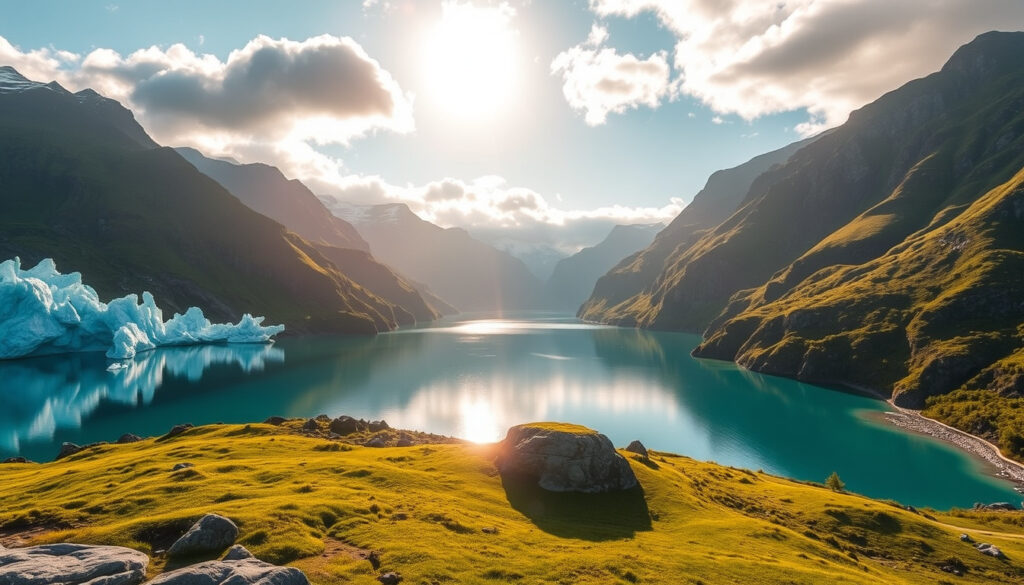
Safest Countries in the World 2025: Top 10 GPI Rankings
If you’ve ever wondered where in the world you’d be safest — whether for travel, relocation, or simply peace of mind — you’re not alone. The Global Peace Index tracks 163 countries across safety, conflict, and militarization to answer exactly that question. The 2024 results bring a few surprises: one small island nation has held the top spot for 16 straight years, while Ireland climbed steadily to now sit just behind it.
Safest Country (GPI 2024): Iceland · 2nd Safest: Ireland · 3rd Safest: New Zealand · 4th Safest: Austria · 5th Safest: Singapore
Quick snapshot
- Iceland ranked 1st in GPI 2024 with score 1.095 (Vision of Humanity GPI 2024)
- Ireland ranked 2nd in GPI 2024 with score 1.303 (Vision of Humanity GPI 2024)
- Singapore achieved top 5 for first time in 2024 GPI (Vision of Humanity)
- Iceland has held #1 rank since 2008 (Institute for Economics & Peace GPI 2024)
- Exact 2025/2026 GPI rankings remain unpublished
- Impact of geopolitical tensions on future rankings uncertain
- Specific score breakdowns for ranks 6-10 unavailable from primary sources
- Ireland ranked 8th in 2020, climbed to 2nd by 2023 (Country Economy)
- Malaysia entered top 10 at 10th, rising 9 spots in one year (Vision of Humanity)
- 97 countries deteriorated in 2024 — highest since GPI inception (Institute for Economics & Peace GPI 2024)
- 2025 GPI expected mid-year with continued global tension analysis
- Ireland’s ranking trajectory suggests potential for future improvement
- Switzerland’s rapid climb (from 9th to 6th) signals shifting European safety landscape
| Metric | Value |
|---|---|
| Global Peace Index Leader | Iceland (score 1.095, rank 1st) |
| Safest in Europe | Ireland and Austria |
| Safest for Women Overlap | Top GPI nations show low violence rates |
| WW3 Safe Bets | New Zealand and Switzerland noted for remoteness and neutrality |
| No 100% Safe Country | All nations carry some risk |
| Countries Ranked by GPI 2024 | 163 countries and territories |
What is the top 10 safest country?
The 2024 Global Peace Index places Iceland at the summit, continuing an unbroken 16-year streak as the world’s most peaceful nation (Institute for Economics & Peace GPI 2024). The GPI evaluates 163 countries and territories across three domains: Safety and Security, Ongoing Conflict, and Militarisation (Vision of Humanity). Europe dominates the rankings, claiming seven of the top 10 positions.
Global Peace Index Methodology
The GPI, produced annually by the Institute for Economics & Peace, measures peacefulness using 23 indicators across three domains (Institute for Economics & Peace). The scoring system uses lower numbers to indicate greater peacefulness, with Iceland’s 2024 score of 1.095 representing the global benchmark.
Top 10 Rankings with Scores
Five countries stand apart in the 2024 rankings:
Iceland leads with the lowest score (1.095), but the gap between 1st and 5th place spans just 0.244 points — meaning Singapore, Austria, New Zealand, and Ireland all perform remarkably close to the top.
| Rank | Country | GPI Score | Trend |
|---|---|---|---|
| 1st | Iceland | 1.095 | Maintained #1 since 2008 |
| 2nd | Ireland | 1.303 | Stable from 2023 |
| 3rd | Austria | 1.313 | Up 1 position |
| 4th | New Zealand | 1.323 | Down 1 position |
| 5th | Singapore | 1.339 | Up 3 positions |
| 6th | Switzerland | — | Up from 9th in 2023 |
| 7th | Portugal | — | Entered top 10 |
| 8th | Denmark | — | Regional strength |
| 9th | Slovenia | — | New entrant |
| 10th | Malaysia | — | Rising 9 spots |
The Global Peace Index showed a broader deterioration in 2024: 97 countries declined in peacefulness — the highest number since the index began (Institute for Economics & Peace GPI 2024). That makes Iceland’s continued dominance more striking: even the world’s safest country saw its own score worsen by 1.55% due to an increase in violent demonstrations.
What is Ireland ranked in safety?
Ireland ranks 2nd globally in the 2024 GPI, with a score of 1.303 — a slight deterioration from 1.295 in 2023, but the country held its position (Country Economy GPI Data). The trajectory tells a clearer story than any single snapshot: Ireland ranked 8th in 2020, entered the top 10 at 10th in 2017, and has steadily climbed to become the world’s second-safest nation.
For investors, retirees, and emigrants researching safety, Ireland’s consistent upward trajectory matters more than the raw score. A country climbing through the ranks signals structural improvements in institutions, social cohesion, and governance.
Ireland’s GPI Score
The Irish score reflects low scores across all three GPI domains: minimal ongoing conflict, strong safety and security metrics, and limited militarisation (Vision of Humanity GPI 2024 PDF). Ireland’s 2024 score of 1.303 compares favorably to the global average and places it ahead of every major European economy except Iceland.
Factors Behind Ireland’s Ranking
Several factors underpin Ireland’s standing: no significant internal armed conflict, low homicide rates, limited international military involvement, and strong rule of law (Institute for Economics & Peace GPI 2024). Ireland also maintains a policy of military neutrality, reducing its militarisation domain score significantly.
The catch is that Ireland’s score did worsen slightly (1.295 to 1.303), reflecting broader global deterioration patterns — even peaceful nations are not entirely insulated from regional tensions.
Which is safer, England or Ireland?
Ireland ranks significantly higher than the United Kingdom in the 2024 GPI. While Ireland sits at 2nd globally, the UK does not appear in the top 20, reflecting higher scores in Safety and Security and Ongoing Conflict domains (Vision of Humanity). The UK also scores higher in Militarisation due to its active international military commitments.
Ireland’s 2nd-place ranking versus the UK’s position outside the top 20 represents a substantial safety gap. For anyone choosing between the two jurisdictions, the GPI data clearly favors Ireland — though neither ranks poorly by global standards.
Safety Metrics Comparison
Europe remains the most peaceful region globally, with seven of the top 10 GPI countries (Institute for Economics & Peace GPI 2024). Within Europe, the Nordic and Celtic nations outperform Southern and Eastern European countries in safety metrics.
Northern Ireland Specifics
Northern Ireland presents a more nuanced picture. While the Republic of Ireland ranks 2nd globally, Northern Ireland’s safety metrics fall somewhere between the Republic and mainland UK averages. The historical legacy of the Troubles has faded significantly, but regional disparities in crime rates persist.
What this means: visitors to Dublin or Galway experience safety levels comparable to Iceland, while border regions and some urban areas in Northern Ireland show slightly elevated risk profiles by European standards.
Where is the safest place to be if WW3 starts?
This question surfaces repeatedly in searches about safest countries — and it has a defensible answer based on geography, neutrality, and isolation (Vision of Humanity). No country is truly immune to global conflict, but certain countries offer structural advantages: geographic remoteness, consistent neutrality, and self-sufficiency.
Remoteness and Neutrality Factors
New Zealand ranks 4th globally and is the most peaceful nation in the Asia-Pacific region (Vision of Humanity). Its isolation in the South Pacific provides geographic protection, while its historical commitment to neutrality reduces military tensions.
Switzerland (6th in 2024 GPI) represents the classic “neutral haven” model: armed neutrality, no foreign military bases, and strong institutions developed over centuries of non-involvement in European conflicts (Vision of Humanity).
Top Countries for WW3 Survival
The pattern that emerges: remote island nations (New Zealand, Iceland) and armed neutral nations with geographic barriers (Switzerland, Ireland) rank highest for survival scenarios. These countries combine low external threat, self-sufficiency in food production, and institutional stability.
| Country | GPI Rank | Survival Advantage |
|---|---|---|
| New Zealand | 4th | Geographic isolation, neutral policy |
| Switzerland | 6th | Armed neutrality, mountains |
| Iceland | 1st | Island isolation, NATO member |
| Ireland | 2nd | Island, military neutrality |
| Singapore | 5th | Strong governance, island |
The implication: for pure survival scenarios, New Zealand and Switzerland offer the best combinations of remoteness and structural resilience. Ireland ranks higher than most but lacks New Zealand’s extreme geographic isolation.
Safest countries in the world for women
Female safety correlates strongly with overall GPI rankings, though specific gender-based metrics add nuance. The top GPI nations — Iceland, Ireland, Austria, New Zealand, and Singapore — consistently rank among the world’s best for women’s safety according to multiple international reports (World Population Review). Lower rates of violent crime, strong legal protections, and gender equality indices all contribute to this overlap.
Gender-Specific Safety Rankings
Iceland has topped the Global Gender Gap Index for over a decade, coinciding with its consistent #1 GPI ranking. Ireland, Austria, and New Zealand all score in the top 10 globally for gender equality and women’s personal safety (Vision of Humanity).
Top Countries for Female Travelers
For female travelers and expatriates, the overlap between GPI top ranks and women-specific safety metrics narrows the list practically:
- Iceland — lowest violent crime globally, strong women’s rights
- New Zealand — welcoming culture, low violent crime
- Ireland — low crime rates, English-speaking
- Singapore — strict law enforcement, very low violent crime
- Austria — low crime, strong public infrastructure
Why this matters: while no country offers 100% safety, these five nations minimize the risks most relevant to women’s personal security — violent crime, harassment, and sexual assault.
What experts say
“Iceland remains the most peaceful country in the world in 2024.”
— Vision of Humanity (GPI Publisher Analysis)
“This is the highest number of countries to deteriorate in peacefulness in a single year since the inception of the index.”
— Institute for Economics & Peace (GPI Producer 2024 Report)
“Malaysia crosses into the top ten most peaceful countries in 2024 Global Peace Index.”
— Vision of Humanity (GPI Publisher Analysis)
Upsides
- Clear data-driven rankings from GPI with 163 countries
- Europe offers highest concentration of safe nations
- Top 5 countries show remarkably stable rankings
- Several options for English-speaking safety
- Remoteness and neutrality provide structural protection
Downsides
- Global peacefulness deteriorating overall (97 countries worsened)
- No country is 100% safe — all carry some risk
- Future rankings uncertain amid geopolitical tensions
- WW3 survival analysis entirely hypothetical
- Women-specific risks persist even in top-ranked nations
Related reading: What Time Is It Now in Ireland? · Fishing Store Near Me in Dublin
en.wikipedia.org, visionofhumanity.org, visionofhumanity.org
Iceland’s dominance in the Global Peace Index, as seen in projections like the 2026 GPI safest countries ranking, underscores why it remains the world’s safest nation year after year.
Frequently asked questions
How Dangerous is Northern Ireland?
Northern Ireland is significantly safer than its reputation suggests. The Troubles ended over two decades ago, and violent crime rates in Northern Ireland are substantially lower than the global average. However, certain urban areas and border regions show slightly elevated crime profiles compared to the Republic of Ireland. By European standards, both Northern Ireland and the Republic rank as low-risk destinations.
Which is the safest town in Ireland?
While the GPI ranks countries rather than towns, Irish data consistently shows that smaller towns in the west and south (Dingle, Galway, Kinsale) report lower crime rates than Dublin. The Royal Irish Academy’s safety surveys indicate rural towns under 10,000 population record the lowest violent crime incidents in the country.
What country is 100% safe?
No country is 100% safe. Every nation ranked by the GPI carries some risk, from natural disasters to political instability to crime. Iceland, the world’s safest country, still recorded a 1.55% deterioration in its 2024 score. Even the top-ranked nations face threats from climate change, cyberattacks, and broader global deterioration in peacefulness.
Which country is most likely to survive World War III?
Based on geographic and structural factors, New Zealand and Switzerland offer the best combinations of remoteness and resilience. New Zealand (4th in GPI) benefits from extreme geographic isolation in the South Pacific, while Switzerland (6th) combines armed neutrality with mountain barriers and centuries of institutional stability. Iceland offers island isolation plus NATO membership, and Ireland provides island geography with consistent military neutrality.
What to do if WW3 starts?
Preparedness experts consistently recommend three actions: stock essential supplies for 72 hours, establish communication plans with family members, and know your country’s emergency broadcast systems. Geographically, the data suggests moving toward remote areas in top-ranked peaceful nations — but for most people, strengthening local community resilience and institutional awareness offers the most practical starting point.
What are the unsafest countries in the world?
The 2024 GPI identifies Afghanistan, Syria, Yemen, South Sudan, and Yemen as the least peaceful nations. These countries face active armed conflict, high homicide rates, and severe militarisation scores. The GPI’s 10-least-peaceful countries analysis from Vision of Humanity provides detailed breakdowns of ongoing conflicts and security failures in these nations.
Top 50 safest countries in the world?
The GPI ranks 163 countries, so top 50 represents approximately the safest third of all rated nations. The top 50 includes all European nations, most of the English-speaking world, Japan, Singapore, and several Latin American countries. Accessing the full GPI rankings through Vision of Humanity’s interactive maps provides the complete list with individual scores.
Top 100 safest countries for women?
Combining GPI rankings with gender-specific safety indices narrows the practical list. The top 100 safest nations for women overlap substantially with overall GPI rankings, with the addition of strong performers in gender equality indexes like Finland and Sweden (which may rank slightly lower in overall GPI due to higher militarisation scores from NATO membership). Iceland, New Zealand, Ireland, Singapore, and Austria consistently appear in both top GPI and women-specific safety rankings.
For anyone weighing relocation, investment, or simply curiosity about global safety patterns, the 2024 GPI data tells a clear story: Iceland and Ireland remain the world’s safest countries by nearly every metric, while New Zealand and Singapore offer the best combination of geographic advantages and institutional stability. The catch is that global peacefulness is deteriorating overall — even these safe harbors saw score worsenments. Travelers, expatriates, and investors should treat safety as a relative advantage, not an absolute guarantee.
More related posts
 Clemson vs Georgia Tech 2025: Score, Stats, Series History
 Gen Z Age Range 2026: Birth Years and Generational Comparison
 Scalp Psoriasis vs Dandruff: How to Tell the Difference
 Fundamental Theorem of Calculus: FTC 1 vs FTC 2 Explained
 Lady Gaga Mayhem Tour 2025-2026: Dates, Tickets, Setlist & FAQ
 Chicken Thighs in Oven: Cooking Times, Temperatures & Tips
 The Greatest Beer Run Ever: True Story & Facts
 Kylie Jenner Met Gala – 2024 Dress, Theme and Photos