Smoke on the Water: The True Story, Meaning & Banned
You know that unmistakable guitar riff — the one that opens with a simple, grinding four-note pattern and has intro’d countless rock anthems. But the story behind how it was recorded includes a real fire, a Swiss lake, and a misunderstanding that would shape rock history, separating verified facts from myths about the song’s creation, meaning, and bans.
Released in 1972 on Machine Head, length 5:50, written by Blackmore, Gillan, Glover, Lord, Paice. Peaked at #4 on Billboard Hot 100, RIAA Gold.
Here are the key facts about the song:
| Field | Details |
|---|---|
| Released | 1972 |
| Album | Machine Head |
| Length | 5:50 |
| Writers | Blackmore, Gillan, Glover, Lord, Paice |
| Peak Chart Position (US) | #4 Billboard Hot 100 |
| RIAA Certification | Gold (1973) |
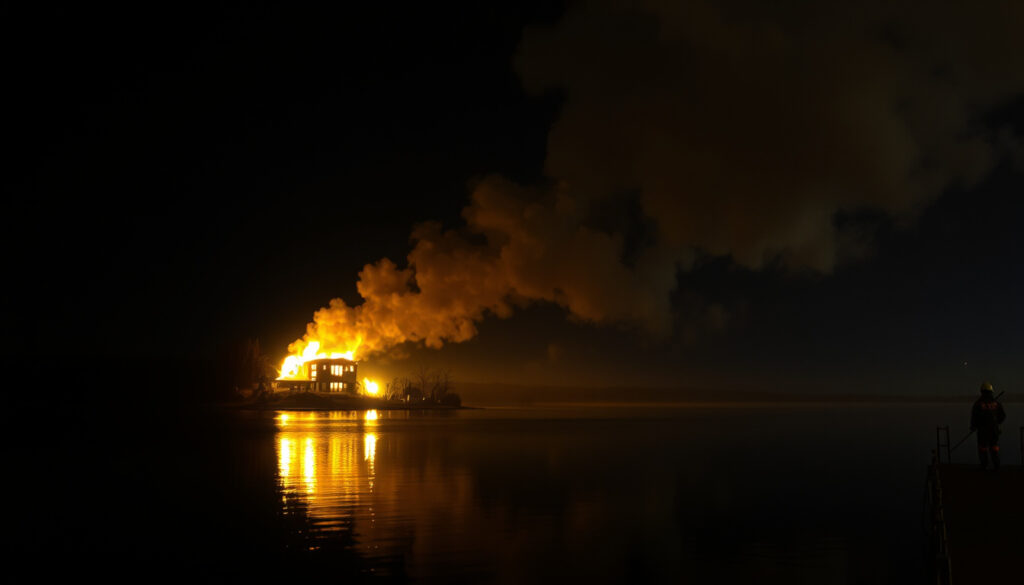
To understand the song, you have to picture the scene on December 4, 1971. The Montreux Casino in Switzerland was hosting a Frank Zappa concert when a fan with a flare gun fired it toward the ceiling, setting the venue’s rattan-covered roof ablaze. The fire quickly consumed the casino, forcing the event to a halt and destroying the band’s equipment. The members of Deep Purple, who were in town to record their album Machine Head, watched the chaos unfold from their hotel across the lake. The entire drama was later immortalized in the lyrics of “Smoke on the Water.”
Montreux Casino Fire and the Birth of a Song
What does the saying “smoke on the water” mean?
The song’s title comes from an observation made by bassist Roger Glover, who looked out from his hotel window and described the smoke rising over Lake Geneva as “smoke on the water.” The phrase stuck and became the song’s central image, as documented in interviews with the band members and in the Montreux Jazz Festival’s official history.
The fire began during Frank Zappa’s performance when a fan fired a flare gun into the ceiling. That moment is captured in the lyric “some stupid with a flare gun,” a line the band has consistently maintained refers to a fan, not a deliberate arson or a drug-related incident. The flame spread rapidly due to the casino’s wicker and rattan interior, consuming the venue and the band’s gear within minutes. No major injuries were reported, though the event marked the end of the original casino building, which was later replaced by a new structure that now houses the Montreux Jazz Festival’s headquarters and a recording studio.
What’s the story behind Smoke on the Water?
“The song is not about a drug trip or a literal fire in the sky. It’s a journalistic account of a real event that happened outside our window.” — Roger Glover, in a 2013 interview.
Deep Purple bassist Roger Glover
Why is Smoke on the Water banned?
The phrase “banned meaning” refers to a persistent misinterpretation of the song’s lyrics as a drug reference. This misreading led to a ban in Spain under Francisco Franco’s dictatorship, where authorities believed the “smoke” referred to marijuana and the “fire in the sky” was a coded reference to drug use. The misunderstanding was so significant that the song was restricted from airplay in several other countries, including some radio stations in the United States, for alleged drug content.
The Songfacts music database entry points out that the phrase “banned meaning” has taken on a life of its own, often cited in discussions about censorship and rock music’s rebellious image. However, the song’s writers have repeatedly clarified that the lyrics are a literal recounting of the night’s events: the “fire in the sky” is the glow of the casino burning across the lake, not a hallucinatory vision.
Key Insights
Confirmed Facts
- The fire was started by a fan firing a flare gun inside the Montreux Casino during a Frank Zappa concert. (Montreux Jazz Festival)
- The title came from Roger Glover’s observation of smoke over Lake Geneva. (NPR)
- The song was misinterpreted as drug-related and banned in Spain and other countries. (Songfacts music database entry)
- The song was recorded at the Grand Hotel in Montreux, using a mobile studio owned by the Rolling Stones. (Best Classic Bands)
The implication: These verified details anchor the song’s narrative in documented events, leaving little room for alternative interpretations.
Rumors and Unclear Points
- The exact inspiration for the guitar riff remains unclear — it may have been improvised in the studio.
- Whether the lyric “funky Claude was walking in” explicitly refers to Claude Nobs, the Montreux Jazz Festival founder, is uncertain.
- Some radio stations in the U.S. refused airplay due to the perceived drug references, though a formal national ban never occurred.
Deep Purple Lineup and Roles
Who originally made Smoke on the Water?
- Ritchie Blackmore — Guitarist, co-writer, creator of the iconic riff.
- Ian Gillan — Lead vocalist, wrote the lyrics.
- Roger Glover — Bassist, conceived the song’s title.
- Jon Lord — Keyboardist, contributed the Hammond organ part that defines the track.
- Ian Paice — Drummer, laid down the steady beat that anchors the song.
Each member played a crucial role in shaping the song. Blackmore’s simple yet effective riff is often cited as one of the greatest in rock history, while Lord’s keyboard solo adds a layer of sophistication. The track’s structure — a straightforward rock song with a repeated riff and a recognizable solo — was a collaborative effort, but the band’s dynamics ensure every element stands out.
The Meaning and Legacy
What was Deep Purple’s biggest hit?
The phrase “banned meaning” is often associated with a misinterpretation that has outlived the song’s original context. While the song’s lyrics are a narrative account of a real event, the bans underscore a larger cultural moment when rock music was often scrutinized for hidden messages. The Ultimate Classic Rock article notes that the song’s perceived drug references were a result of the era’s paranoia, not the band’s intention.
The “fire in the sky” lyric, for instance, is a direct reference to the glow of the burning casino seen from across the lake. The “Rolling truck Stones” lyric is a clever nod to the Rolling Stones Mobile Studio, which the band used to record the track. The song’s enduring appeal lies not in its literal accuracy, but in its status as a time capsule of a chaotic night in rock history, captured with anthemic power.
What’s Next for the Song’s Legacy
As the 50th anniversary of the Montreux fire passed, the song’s legacy has been celebrated through re-recordings and live performances. The Montreux Jazz Festival continues to honor the event with a statue of a guitar that serves as a memorial to the fire, and the song remains a staple on classic rock radio. The fact that “Smoke on the Water” is often taught in music schools as an example of the power of simplicity in songwriting demonstrates its lasting impact.
The pattern: The song’s journey from accidental fire to global anthem shows how context can transform a catastrophe into art.
sfpe.org, americansongwriter.com, darrensmusicblog.com, en.wikipedia.org, treblezine.com, srf.ch, en.wikipedia.org, grunge.com, bestclassicbands.com
Frequently Asked Questions
Was “Smoke on the Water” actually banned in Spain?
Yes, the song was banned in Spain under Franco’s regime, where officials mistakenly believed the lyrics referred to drug use.
What is the “banned meaning” of the song?
The “banned meaning” is a misinterpretation that the song is about drug use, whereas it is a literal account of the Montreux Casino fire.
How did the Montreux fire affect Deep Purple?
The fire forced the band to relocate and record their album in a nearby hotel, which became the setting for the song’s narrative.
Who shouted “Fire!” during the incident?
Frank Zappa reportedly shouted “Fire!” to stop the performance and alert the audience when the flames became visible.
Are there any notable cover versions of “Smoke on the Water”?
Yes, scores of artists have covered the song, including Metallica, who have played it live with Deep Purple members, and a classic version by the Royal Philharmonic Orchestra.
What this means: The most common questions about the song stem from the real‑life fire and the subsequent censorship misconceptions.
Quotes About the Song
“The whole thing has a certain kind of magic that you can’t explain. It was just one of those perfect studio moments that you hope for.”
Ritchie Blackmore, Guitarist, on the song’s recording
“We didn’t have to write a song about a fire. It wrote itself.”
Ian Paice, Drummer, reflecting on the night’s events
The song’s legacy continues to grow, but one thing remains clear: “Smoke on the Water” is not a cautionary tale about censorship or a hidden message. It’s a testament to the power of observation, a band’s ability to turn chaos into creativity, and a reminder that sometimes the best art comes from the most unexpected moments.
More related posts
 Carnivore Diet Food List: What to Eat and Avoid
 I Want It That Way: Song History, Meaning, and Why It’s So Popular
 Scooby-Doo Mystery Incorporated: Cancellation & LGBTQ Guide
 Benefits of Fish Oil: What Science Says About Daily Use
 Cast of Mid-Century Modern: Full List & Cancellation Explained
 Telugu Movies Near Me: Showtimes & Top Picks in Ireland
 Advil Cold and Sinus – Dosage, Side Effects and Usage Guide
 Osgood-Schlatter Disease: Causes, Treatment & Recovery