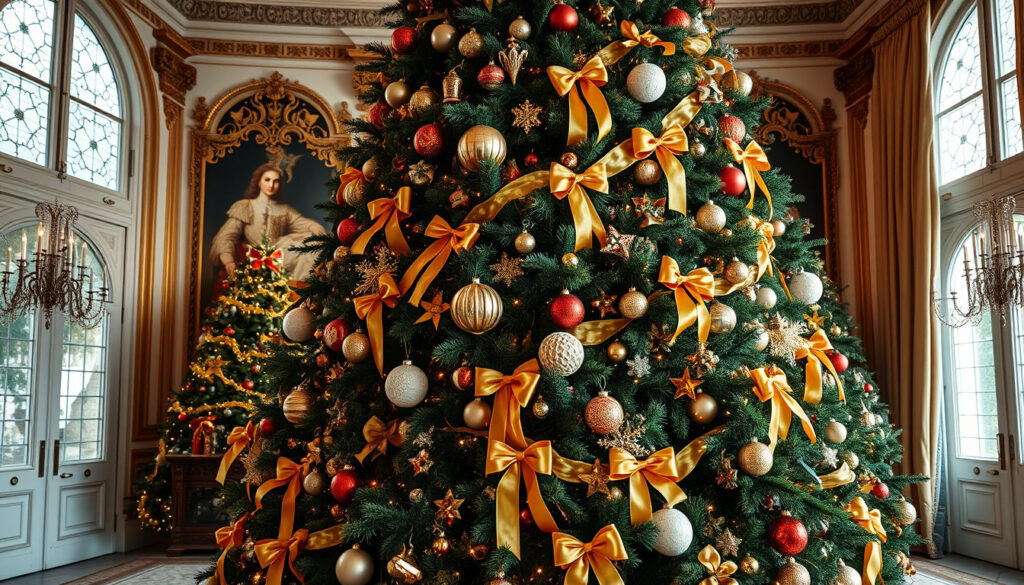
Grand Duchess Christmas Tree – Luxembourg’s Private Royal Tradition
Luxembourg’s Grand Ducal Family maintains a cherished Christmas tree tradition at their private residence, Fischberg Castle. Unlike the grand public displays found in other European capitals, this annual ritual emphasizes intimate family participation, with handmade ornaments crafted by family members themselves. The tradition represents a distinctive approach to royal festivities in the small but historic European monarchy.
Understanding the Grand Ducal Christmas Tree
Location
Fischberg Castle, the Grand Ducal Family’s private residence in Luxembourg
Tree Size
Described as a “huge Christmas tree” with sparkling lights and family-made decorations
Lighting Date
Not publicly announced; remains a private family ceremony at an undisclosed date
Tradition Origin
Modern practice traced to Grand Duke Henri and Grand Duchess Maria Teresa’s reign (2000–2025)
Key Insights About This Royal Tradition
- The tradition centers on family-crafted decorations rather than purchased ornaments, reflecting the royal family’s commitment to personal involvement
- Hereditary Grand Duchess Stéphanie has led decoration activities since her marriage to Guillaume in 2012
- The Kraïzbierg Foundation workshop hosted ornament-making sessions in 2024 before the family decorated their tree together
- Prince Charles (age 4) and Prince François participated in creating ornaments, continuing the intergenerational practice
- The 2024 edition featured “castlecore” aesthetic trends in handmade decorations, potentially influencing 2025 design directions
- Unlike public royal displays elsewhere in Europe, this tree remains entirely private with no public access or ceremonies announced
| Fact | Details |
|---|---|
| Primary Location | Fischberg Castle, Luxembourg |
| Tree Style | Large evergreen with sparkling lights |
| Ornament Source | Handmade by royal family members |
| Key Participants (2024) | Hereditary Grand Duke and Duchess, Prince Charles, Prince François |
| Decoration Workshop | Kraïzbierg Foundation workshops |
| Access Status | Private; not open to public visitors |
| Aesthetic Theme (2024) | “Castlecore” handmade items |
Origins and Cultural Background
European Roots of Royal Christmas Trees
The Grand Ducal Christmas tree tradition fits within broader European royal customs that emerged from Protestant German regions during the 16th through 18th centuries. Royal intermarriages helped spread the custom across the continent, with notable examples including Princess Henriette von Nassau-Weilburg introducing the tradition to Austria in 1816. The House of Nassau-Weilburg, which traces Luxembourg’s grand ducal line to 1890, contributed to this continental diffusion of Christmas customs through dynastic connections.
Luxembourg-Specific Development
Specific evidence for a Luxembourg grand ducal Christmas tree appears tied to the modern family under Grand Duke Henri and Grand Duchess Maria Teresa, who began their reign in 2000. No public historical records document an earlier grand ducal tree tradition, suggesting the current practice represents a more recent evolution of family customs rather than a centuries-old unbroken tradition.
Luxembourg’s grand ducal line traces to 1890 under the House of Nassau-Weilburg, following Catholic reigns including Grand Duchess Marie-Adélaïde (1912–1919). The modern family tradition appears to have developed during Grand Duke Henri’s reign rather than from earlier grand ducal periods.
The Current Practice at Fischberg Castle
Family Involvement and Decoration Process
Hereditary Grand Duchess Stéphanie has emerged as a central figure in the family’s Christmas decoration activities. In 2024, she joined Hereditary Grand Duke Guillaume and their sons Prince Charles and Prince François for ornament-making sessions at Kraïzbierg Foundation workshops before the tree was adorned at Fischberg Castle. The children, with Prince Charles aged four, participated in creating and baking ornaments themselves—a hands-on approach that distinguishes this tradition from more formal royal ceremonies.
Design Elements and Aesthetic Choices
The tree features sparkling lights alongside painted, artisanal shapes crafted by family members. The 2024 edition highlighted what has been described as a “castlecore” aesthetic, featuring rustic, handcrafted items that blend traditional Christmas elements with medieval-inspired design sensibilities. This approach suggests a deliberate effort to create a cozy, family-oriented atmosphere reflecting contemporary home trends while maintaining royal formality.
The “castlecore” aesthetic visible in the 2024 decorations has drawn attention from design observers, with some anticipating that similar handcrafted, medieval-inspired elements may appear in broader Christmas design trends throughout 2025.
Timeline of the Grand Ducal Family and Christmas Traditions
- 1890 — Luxembourg’s grand ducal line established under the House of Nassau-Weilburg
- 1912–1919 — Reign of Grand Duchess Marie-Adélaïde; Catholic monarchy period
- 2000 — Grand Duke Henri and Grand Duchess Maria Teresa ascend to the throne
- 2000–2025 — Modern family Christmas traditions develop during Henri and Maria Teresa’s reign
- 2012 — Hereditary Grand Duke Guillaume marries Stéphanie de Lannoy; she begins leading decoration activities
- 2013–2020s — Sons Prince Charles and Prince François born; children begin participating in ornament-making
- 2024 — Family creates ornaments at Kraïzbierg Foundation workshops; latest publicly documented tree
- 2025 — Grand Duke Henri abdicates; Guillaume becomes Grand Duke Guillaume V; tradition continues privately
What Remains Confirmed Versus Uncertain
| Established Information | Remains Unclear |
|---|---|
| Location: Fischberg Castle | Exact dimensions and tree height |
| Tree decorated annually with lights | Precise lighting ceremony date |
| Family members create handmade ornaments | Whether the same tree is reused annually or replaced |
| Stéphanie leads decoration activities | Specific decoration techniques used |
| Tradition began under Henri and Maria Teresa | Whether earlier grand ducal generations had similar practices |
| No public access or ceremonies | Plans for any 2025 public involvement |
Data current to late 2024; 2025 specifics remain unavailable as the tradition intentionally avoids public announcements. For real-time updates on family activities, the Grand Ducal Court’s social media presence represents the most reliable channel, though official confirmation of specific tree details is rarely provided.
Cultural Significance and Modern Relevance
The Grand Ducal Christmas tree tradition reflects a deliberate choice to maintain intimacy over spectacle. While other European royal families stage public tree-lighting ceremonies and open days at decorated palaces, Luxembourg’s grand ducal household has chosen to keep this particular tradition entirely private. This approach aligns with Luxembourg’s broader royal identity, which often emphasizes discretion and family values over ostentatious display.
The emphasis on handmade decorations also distinguishes this tradition from more commercial royal Christmas displays. By involving young children in creating ornaments, the family projects an image of relatability and family continuity that resonates with broader cultural trends toward authentic, handcrafted experiences—trends also visible in the “castlecore” aesthetic that emerged in 2024. For those interested in exploring Luxembourg’s cultural heritage, this tradition exemplifies how the small European nation blends monarchical tradition with contemporary family values.
Visiting and Viewing Options
Unlike the decorated trees at royal palaces in Vienna, Copenhagen, or London, the Grand Ducal Christmas tree at Fischberg Castle remains inaccessible to visitors. There are no announced lighting ceremonies, public tours, or viewing opportunities associated with this tradition. Visitors interested in experiencing Luxembourg’s royal Christmas atmosphere should consider the annual Christmas markets in Luxembourg City, which offer public festivities during the holiday season.
For those following royal activities, the Grand Ducal Court’s official channels occasionally share glimpses of family traditions, though specific details about the Christmas tree are rarely publicized. The private nature of the tradition appears to be a deliberate family preference rather than a security measure.
Summary and Key Takeaways
The Grand DuchESS Christmas tree represents a distinctive approach to royal holiday traditions in Europe. Centered at Fischberg Castle, this private family ritual emphasizes handmade craftsmanship, intergenerational participation, and intimate family gatherings rather than public spectacle. The tradition, most actively documented during Hereditary Grand Duchess Stéphanie’s involvement since 2012, continues under the new reign of Grand Duke Guillaume V and Grand Duchess Stéphanie in 2025. While the tree remains inaccessible to visitors, its influence on design trends—particularly the “castlecore” aesthetic—has extended beyond Luxembourg’s borders, resonating with broader cultural movements toward authentic, handcrafted experiences.
Frequently Asked Questions
Where is the Grand DuchESS Christmas tree located?
The tree is located at Fischberg Castle, which serves as the Grand Ducal Family’s private residence in Luxembourg. The castle is not open to public visitors.
Can visitors attend the tree lighting ceremony?
No. The Grand Ducal Christmas tree is a private family tradition. There are no public ceremonies, tours, or viewing opportunities associated with this tradition.
Who decorates the Grand DuchESS Christmas tree?
Family members create the ornaments themselves. Recent documentation shows Hereditary Grand Duchess Stéphanie, Hereditary Grand Duke Guillaume, Prince Charles, and Prince François all participating in making decorations.
When did this tradition begin?
The current practice appears tied to Grand Duke Henri and Grand Duchess Maria Teresa’s reign beginning in 2000. No specific records exist of an earlier grand ducal Christmas tree tradition.
What is the “castlecore” aesthetic mentioned in reports?
“Castlecore” refers to a design aesthetic featuring rustic, medieval-inspired handmade items. The 2024 Grand Ducal Christmas tree featured decorations created in this style, potentially influencing broader Christmas design trends in 2025.
How can I get updates about the tradition?
The Grand Ducal Court’s official channels occasionally share family activity updates. However, specific Christmas tree details are rarely publicized due to the private nature of the tradition.
Where can I learn more about Luxembourg’s royal family?
The official website of the Luxembourg Monarchy provides information about the Grand Ducal Family and their public activities.
More related posts
 Lexus IS 350 F Sport Review: Specs, Problems, Best Years
 What Is a Z Fold Phone? Samsung Galaxy Z Fold 7 Guide
 Imagine Credit Card Login – Official Guide to Secure Access
 Cast of The Life List: Full Cast & Character Guide (2025)
 Can Dogs Eat Mango Safely? Benefits, Risks & Vet Tips
 Where to Watch Los Angeles Rams vs Chicago Bears: Channel & Time
 Texas Tech Red Raiders Football: Mahomes, Rivals & History
 Demon Slayer Infinity Castle Movie: Release Date & Full Guide