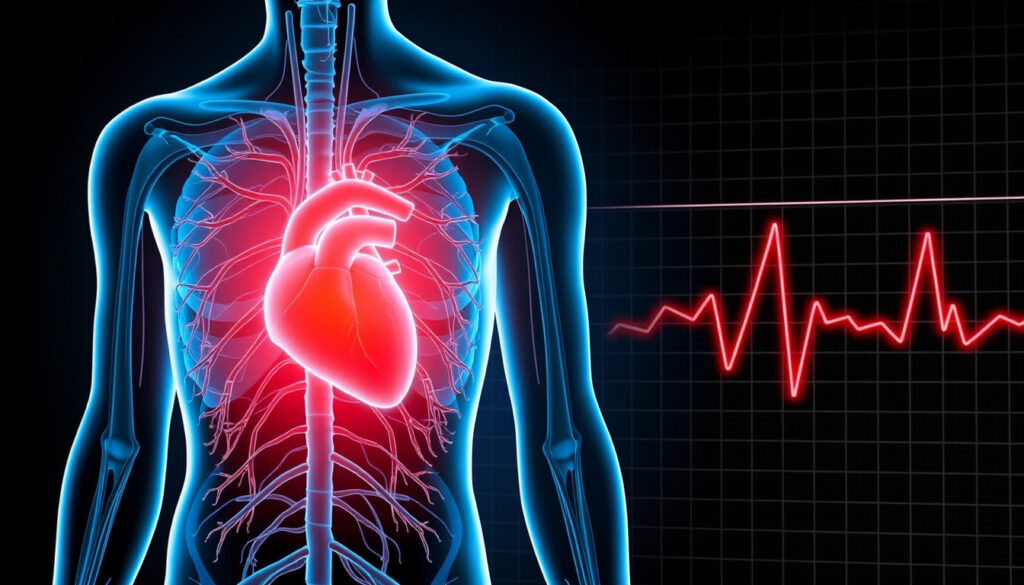
What Is POTS Disease? Symptoms, Causes & Treatment
If you’ve ever stood up quickly and felt your vision go dark, your heart race, and your legs turn to jelly, you probably chalked it up to standing too fast. But for millions of people, that dizzying rush isn’t a one-off quirk—it’s a daily battle with a condition called postural orthostatic tachycardia syndrome, or POTS.
POTS affects an estimated 1–3 million Americans, predominantly women, with onset typically between ages 15 and 50.
What Is POTS?
- Postural Orthostatic Tachycardia Syndrome (StatPearls, a peer-reviewed medical reference)
- Autonomic nervous system disorder
- Heart rate increases abnormally upon standing
Common Symptoms
- Dizziness and lightheadedness (PMC review on POTS diagnosis)
- Fatigue and brain fog
- Palpitations and chest discomfort
- Nausea and gastrointestinal issues
Causes & Triggers
- Autoimmune dysfunction (PMC article on POTS as a sequela)
- Viral infections (including COVID-19)
- Dehydration, heat, stress
Diagnosis & Management
- Tilt table test or active stand test (PMC synthesis of diagnostic guidelines)
- Lifestyle changes (hydration, compression stockings)
- Medications (beta-blockers, fludrocortisone)
| Label | Value |
|---|---|
| Affected population in the US | Estimated 1–3 million people (pre-pandemic estimates; likely higher post-COVID) |
| Predominant gender | Female-predominant (around 80% of patients are women) |
| Typical age of onset | Most commonly between 15 and 50 years |
| Heart rate increase upon standing (adults) | At least 30 beats per minute within 10 minutes (no orthostatic hypotension) |
| Key diagnostic tests | Tilt table test or active stand test (NASA lean test) |
| Common misdiagnoses | Anxiety, panic disorder, dehydration, chronic fatigue syndrome |
| Post-COVID connection | Significant rise in POTS diagnoses among long-COVID patients |
The table above shows the key diagnostic criteria and demographic patterns that define POTS.
What exactly is POTS, and why is it so often missed?
POTS is a form of dysautonomia—a disorder of the autonomic nervous system that regulates involuntary functions like heart rate and blood pressure. When someone with POTS stands up, gravity pulls blood downward, and the body fails to compensate properly. Instead of maintaining steady blood flow to the brain, the heart beats faster and faster to try to keep up, leading to a constellation of symptoms that can feel terrifying.
According to StatPearls (NCBI Bookshelf, a peer-reviewed medical reference), POTS is defined by an excessive heart rate increase of at least 30 beats per minute in adults (or 40 bpm in adolescents) within 10 minutes of standing, in the absence of orthostatic hypotension. A minimum symptom duration of 3–6 months is required for diagnosis, and symptoms improve with recumbency, as noted in a PMC review on the diagnosis and management of POTS.
Despite its clear physiological basis, POTS is notoriously overlooked. One review in the NP Journal (a nurse practitioner publication covering frequently missed diagnoses) highlights a stark reality: patients typically see multiple clinicians over several years before receiving a correct diagnosis, often being dismissed as anxious or overreacting in the meantime.
Why do doctors sometimes dismiss POTS as anxiety?
The overlap is the problem. When a patient describes a racing heart, lightheadedness, and fatigue, the default assumption in a rushed appointment is often panic or generalized anxiety. That’s understandable—but it’s also inaccurate. POTS shares symptomatic features with anxiety, panic attacks, dehydration, anemia, thyroid disease, and other dysautonomias, which contributes to frequent misdiagnosis, according to a PMC article (a Tier 1 source discussing POTS as a sequela of COVID-19).
One critical difference: in POTS, the heart rate spike is positional—it happens on standing and resolves when lying down. Anxiety-induced tachycardia typically occurs in episodes and is less tied to posture. A consultation article from PMC (a peer-reviewed review on dysautonomia diagnosis) emphasizes that clinicians should exclude other causes of sinus tachycardia—including panic attacks, pain, exercise, caffeine, and alcohol—before confirming POTS. The same source notes that a standing test can confirm the diagnosis if the heart-rate rise criterion is met within the first 10 minutes without orthostatic hypotension.
There’s also a gender dimension that patterns into the dismissals. Because POTS predominantly affects women, many patients report their symptoms are attributed to stress or hormonal “female trouble” before a specialist is consulted. The PMC article on POTS as a sequela observes that the post-COVID rise in cases—particularly among women—has finally forced a broader conversation about autonomic dysfunction, but old habits of mind remain.
How has the pandemic changed POTS detection and diagnosis?
Long COVID has changed the math. Before 2020, POTS was a niche diagnosis known mainly to cardiologists and neurologists. Now, it’s a household term in medical circles—and for good reason. Research from a 2025 PMC review (a comprehensive meta-analysis of POTS prevalence post-COVID) reports that a significant proportion of long-COVID patients meet the diagnostic criteria for POTS, which has led to a surge in referrals to autonomic clinics.
This post-pandemic wave has had a dual effect. On one hand, it has accelerated research into diagnostic protocols, including the refinement of the tilt table test and active stand test. On the other, it has exposed gaps in the healthcare system: many patients still face long waits for specialists, and some primary care providers remain unfamiliar with even basic orthostatic screening. The PMC article on POTS as a sequela notes that the rise in diagnoses has also increased awareness among healthcare professionals, but it warns that diagnostic criteria must be applied consistently to avoid both overdiagnosis and underdiagnosis.
For patients, this means the landscape is more hopeful than it was a decade ago. There are recognized specialists, validated testing protocols, and—crucially—a community of researchers who are no longer dismissing symptoms as “all in your head.” The NP Journal article concludes that with proper diagnosis and management, most POTS patients can improve significantly, although the condition can severely impact quality of life if left untreated.
The implication: increased awareness has shifted POTS from a fringe condition to a recognized clinical priority.
What does the diagnostic process actually look like?
Getting a POTS diagnosis isn’t a single blood test—it’s a process of exclusion and confirmation. According to the PMC review on POTS diagnosis and management, clinicians typically start with a standing test or a tilt table test, measuring heart rate and blood pressure at intervals over 10 minutes. The key criteria: a heart rate rise of 30+ bpm (adults) or 40+ bpm (teens) without a significant drop in blood pressure.
But before that test, doctors must rule out other conditions that mimic POTS. A PMC synthesis of diagnostic guidelines (a Tier 1 source) lists the differentials: hyperthyroidism, anemia, dehydration, deconditioning, or even certain medications. This is why the diagnosis process often feels slow—it’s methodical, and it should be.
For patients who suspect POTS, there’s a simple at-home screening: monitor your heart rate with a smartwatch or pulse oximeter, lie flat for 10 minutes, then stand still for 10 minutes and record the change. A sustained increase of 30+ bpm is a red flag, but it’s not a definitive diagnosis—only a clinician can confirm it, as emphasized in the StatPearls reference (authoritative medical textbook). Self-testing is a tool for advocacy, not a substitute for medical evaluation.
The catch: while self-testing can raise suspicion, only a clinician can confirm the diagnosis and rule out other conditions.
What’s the long-term outlook, and what helps?
POTS is not life-threatening in itself, but it can be life-altering. The PMC management review (a Tier 1 clinical source) states that while POTS doesn’t reduce life expectancy, it can severely impair the ability to stand, work, study, and socialize. The same source notes that many patients experience a high burden of symptoms, including fatigue, cognitive difficulties (“brain fog”), and exercise intolerance.
Management is multi-pronged. First-line strategies include increased fluid and salt intake (to expand blood volume), compression garments (to prevent blood pooling), and a graduated exercise program—particularly recumbent exercise like swimming or cycling, which is better tolerated than upright exercise. Medications such as midodrine, fludrocortisone, and beta-blockers are sometimes prescribed, though a PMC synthesis of treatment evidence notes that many treatments are used off-label and based on clinical experience rather than large trials.
A notable paradox: exercise is one of the best treatments for POTS, but it’s also the hardest thing to do when you feel terrible. This is where a structured rehab program, supervised by a physical therapist who understands dysautonomia, makes the difference. The PMC post-COVID POTS article observes that patients who adhere to gradual reconditioning protocols often see substantial improvement within months, while those who remain sedentary tend to have a more chronic course.
What separates fact from speculation in the POTS narrative?
There’s a lot of misinformation circulating about POTS, so it’s worth drawing some clear lines. The StatPearls reference (peer-reviewed medical literature) confirms that POTS is a recognized, physiological syndrome—not a psychiatric disorder. The PMC management review confirms that it can occur at any age, though it’s most common in women of reproductive age. A 2025 PMC evidence synthesis confirms the post-COVID link, with a notable share of long-COVID patients meeting diagnostic criteria.
What remains uncertain within the research community? The exact mechanisms—whether POTS is primarily a blood-volume issue, a neuropathy problem, or an autoimmune response—are still being studied. The PMC post-COVID article acknowledges that the long-term natural history without treatment is not fully mapped, and the role of specific triggers in all patients has not been established. These gaps are honest, and patients should be cautious of anyone claiming a single definitive cause or cure.
One thing the evidence is clear on: POTS is real, it’s measurable, and it’s not anxiety. The NP Journal diagnostic-review piece concludes by urging clinicians to keep POTS on the differential diagnosis for any patient—particularly women—presenting with orthostatic symptoms and a pounding heart.
Related reading: Osgood-Schlatter Disease: Causes, Treatment & Recovery · Gastroesophageal Reflux Disease Symptoms: Complete Guide
pubmed.ncbi.nlm.nih.gov, academic.oup.com, neurosciencenews.com, pmc.ncbi.nlm.nih.gov, pmc.ncbi.nlm.nih.gov, news.utoledo.edu, pmc.ncbi.nlm.nih.gov, pmc.ncbi.nlm.nih.gov
Frequently asked questions
Is POTS dangerous or life-threatening?
POTS itself is not life-threatening and does not reduce life expectancy, according to the PMC management review. However, it can severely impact quality of life, and falls due to fainting or near-fainting are a real secondary risk.
How is POTS diagnosed in a doctor’s office?
Clinicians use a tilt table test or an active stand test, measuring heart rate and blood pressure within 10 minutes of standing. A heart rate rise of at least 30 bpm (40 bpm in adolescents) without orthostatic hypotension is a core criterion, per StatPearls.
Can you self-test for POTS at home?
You can monitor your heart rate lying down and then after 10 minutes of standing. A sustained rise of 30+ bpm is suggestive, but it’s not a definitive diagnosis—you need a clinician to rule out other conditions, as noted in the PMC diagnosis review.
Why are women more likely to get POTS?
About 80% of POTS patients are women, though the reason isn’t fully understood. The PMC post-COVID article acknowledges this imbalance but notes that the underlying hormonal or physiological causes remain an open research question.
Does POTS commonly co-occur with long COVID?
Yes. A 2025 PMC evidence synthesis reports that a significant proportion of long-COVID patients meet POTS diagnostic criteria, which has contributed to the post-pandemic surge in diagnoses.
Is exercise safe if you have POTS?
Yes, but it must be adapted. The PMC management review recommends starting with recumbent exercise (cycling, swimming) and gradually increasing upright tolerance, ideally under professional guidance.
More related posts
 How Much Caffeine Is Too Much – Safe Limits by Age and Group
 Union Station Kansas City: Guide to Attractions, Pricing & More
 Coke Zero vs Diet Coke: Which Is Better? A Comparison
 Dress Shoes for Men: Styles, Comfort & Buying Guide
 Iris by Goo Goo Dolls: Meaning, Movie, Popularity & More
 When Does Spring Start 2024? Astronomical vs Meteorological
 Chicken Broccoli Rice Casserole: Easy No-Soup Recipe
 Watch MSNBC Live Stream Free: Options, Costs & Apps