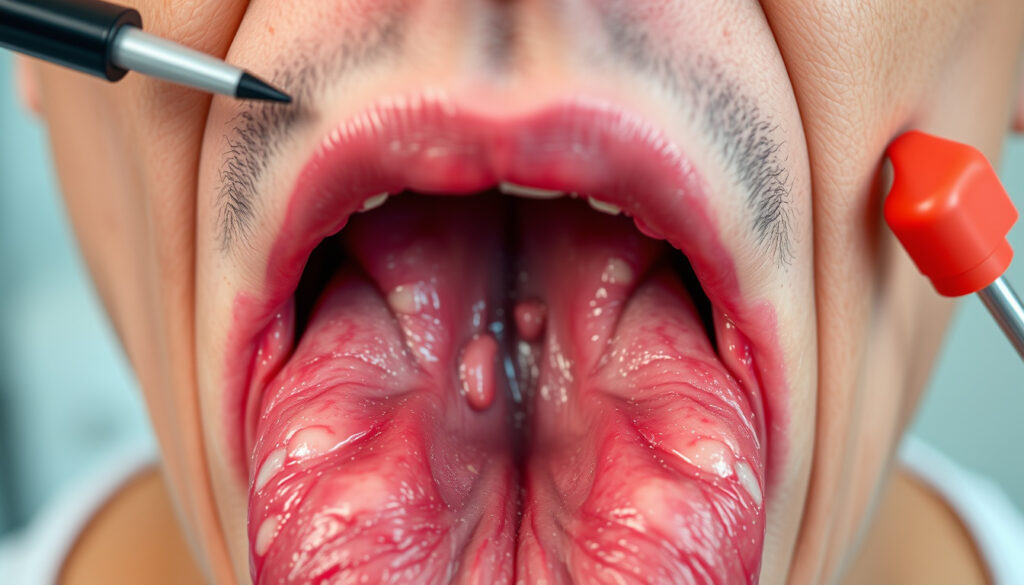
What Does Strep Throat Look Like? Signs and Visual Guide
A sore throat can mean a viral infection that clears up on its own, or it can be strep throat, a bacterial infection that needs antibiotics. This visual guide uses CDC and Mayo Clinic criteria to help you tell the difference by looking at symptoms, age patterns, and red-flag signs.
Key Strep Throat Statistics: Approximately 11 million U.S. outpatient visits for strep throat each year · Affects 15–30% of children with sore throat · Incubation period of 2–5 days · Contagious 1–2 days before symptoms · Non-contagious after 24 hours of antibiotics
Strep Throat Symptoms
- Sudden sore throat
- Painful swallowing
- Fever above 101°F
- Swollen lymph nodes
- White patches on tonsils
Sources: CDC · Mayo Clinic
How to Differentiate Strep from Viral
- Strep comes on quickly
- No cough or runny nose with strep
- Viral sore throat often includes cold symptoms
- Strep may cause red spots on roof of mouth
Sources: CDC · Mayo Clinic News Network
When to See a Doctor
- Sore throat with fever and swollen nodes
- Difficulty swallowing or breathing
- No improvement after 48 hours
- Exposure to known strep case
Sources: Mayo Clinic · NHS
Treatment Options
- Antibiotics (penicillin or amoxicillin)
- Over-the-counter pain relievers
- Warm liquids and throat lozenges
- Rest and hydration
Sources: Mayo Clinic · CDC
| Attribute | Details | Source |
|---|---|---|
| Cause | Group A Streptococcus bacteria | CDC |
| Incubation period | 2–5 days | CDC |
| Contagious period | Up to 24 hours after starting antibiotics | CDC |
| Treatment | Antibiotics (penicillin or amoxicillin) | Mayo Clinic |
| Complications (if untreated) | Rheumatic fever, kidney inflammation (rare) | CDC |
How can I tell if my sore throat is strep?
The CDC says a sore throat caused by a virus or group A Streptococcus can look similar at first, so appearance alone is not enough to diagnose strep. However, the pattern of symptoms offers strong clues.
What are the key differences between strep and viral sore throat?
Strep throat often starts quickly and can be severe. Viral sore throats usually come with other cold symptoms like cough, runny nose, and hoarseness.
| Symptom | Strep Throat | Viral Sore Throat |
|---|---|---|
| Onset | Sudden, rapid | Gradual |
| Fever | Common, often >101°F | Mild or absent |
| Cough | Rare | Common |
| Runny nose | Rare | Common |
| Swollen lymph nodes | Common, tender | Uncommon |
| White patches on tonsils | Common | Rare |
The pattern is clear: the presence of cough or runny nose strongly suggests a virus.
When should I see a doctor for a sore throat?
You should see a doctor if you have a sore throat with fever over 101°F, swollen lymph nodes, or white patches on your tonsils. The NHS advises urgent evaluation if you have difficulty breathing, cannot swallow, drool, or make a high-pitched sound while breathing.
Can you visually identify strep throat?
Visual inspection can raise suspicion for strep throat, but it cannot confirm the diagnosis. The Mayo Clinic describes telltale signs that appear in the throat.
What does strep throat look like in adults?
In adults, strep throat typically presents as a red, inflamed throat with swollen tonsils. The Mayo Clinic notes that white patches or streaks of pus may appear on the tonsils, and tiny red spots may be visible on the roof of the mouth.
What does strep throat look like in kids?
Children with strep throat show similar signs—red and swollen tonsils—but may also have nausea, vomiting, and headache. Mass General Brigham reports that small red spots on the roof of the mouth are a common sign in children.
What are the visual signs on the tonsils and palate?
The key visual signs include red, swollen tonsils, white patches or streaks of pus on the tonsils, and tiny red spots on the soft palate (roof of the mouth). Swollen, tender lymph nodes at the front of the neck are also common.
“Strep throat usually causes throat pain and difficulty swallowing, and the tonsils may appear red and swollen with white patches.”
– Mayo Clinic
What are 5 symptoms of strep throat?
The CDC lists these five hallmark symptoms of strep throat: sudden sore throat, pain on swallowing, fever above 101°F, swollen lymph nodes, and white patches on tonsils.
What are the 4 criteria for strep throat?
Medical professionals use the Centor criteria to assess strep likelihood. The four criteria are: fever, tonsillar exudate (white patches), tender cervical lymph nodes, and absence of cough. Meeting three or four criteria suggests a high probability of strep.
What are the most common symptoms in adults vs children?
Adults typically report sore throat, fever, and difficulty swallowing. Children may additionally experience headache, stomach pain, and vomiting, according to the Mayo Clinic.
“Strep throat is most common in school-age children ages 5 to 15.”
– GoHealth Urgent Care
What could be mistaken for strep throat?
Several conditions can mimic strep throat. Common misdiagnoses include viral pharyngitis, the common cold, influenza, tonsillitis, and mononucleosis.
What other conditions have similar symptoms?
Viral pharyngitis often looks identical to strep but includes cough and runny nose. Scarlet fever is strep throat with an added red rash on the body. Mononucleosis causes severe sore throat with swollen lymph nodes and fatigue.
How can you tell the difference?
Strep throat usually does not include cough or runny nose. If you have those symptoms, it is almost certainly viral. A rapid strep test or throat culture is the only definitive way to confirm strep.
Does strep throat go away on its own?
Strep throat can resolve in 3–5 days without antibiotics. However, antibiotics reduce symptom duration by 1–2 days and prevent complications like rheumatic fever.
Is strep throat contagious without treatment?
Yes, strep throat is highly contagious. People are contagious 1–2 days before symptoms start and remain contagious until they have been on antibiotics for 24 hours.
How long does strep throat last?
Without antibiotics, symptoms typically last 3–5 days. With antibiotics, most people feel better within 24–48 hours.
What drink kills a sore throat fast?
Warm liquids like honey tea can soothe a sore throat. No drink kills the bacteria that causes strep, but warm fluids provide relief. Antibiotics are required to eliminate the infection.
“Antibiotics reduce symptom duration by 1–2 days and prevent rheumatic fever.”
– CDC
Related reading: Normal Throat vs Sore Throat: Key Differences
my.clevelandclinic.org, gohealthuc.com, freemedicaljournals.com, health.ucdavis.edu, infectioncontroltoday.com, mayoclinic.org
For a detailed look at the distinctive white patches and red spots, check out this visual guide to strep throat signs that illustrates the key differences from a viral sore throat.
Frequently Asked Questions
Is strep throat contagious before symptoms appear?
Yes. People can spread the bacteria 1–2 days before they develop symptoms, even when they feel fine.
Can adults get strep throat?
Yes, though it is most common in children ages 5–15, adults can and do get strep throat.
Can you have strep throat without a fever?
Yes. While fever is a common symptom, some people, especially adults, may have strep throat without a noticeable fever.
How is strep throat diagnosed?
A rapid strep test (done in minutes) or a throat culture (takes 1–2 days) confirms the diagnosis. Visual inspection alone is not reliable.
What happens if strep throat is untreated?
Untreated strep can lead to complications including rheumatic fever, kidney inflammation, and abscesses around the tonsils.
Can strep throat cause a rash?
Yes. If the strep bacteria produce a certain toxin, it can cause scarlet fever, which includes a red, sandpaper-like rash on the body.
Is strep throat more common in winter?
Yes. Strep throat circulates more frequently during late winter and early spring.
More related posts
 Audi e-tron GT Review: Price, Specs & Used Guide in Ireland
 Where Is the Winter Olympics 2026? Milano Cortina Locations
 The Greatest Beer Run Ever: True Story & Facts
 Delhi Capitals vs Gujarat Titans Match Scorecard 2026
 One AirPod Not Working – Step-by-Step Fix Guide
 Dallas Mavericks vs 76ers Match Player Stats: Key Numbers
 Pachuca vs. América: Why No Fans and What the 0-0 Means
 How to Boil an Egg – Perfect Soft, Medium and Hard Results