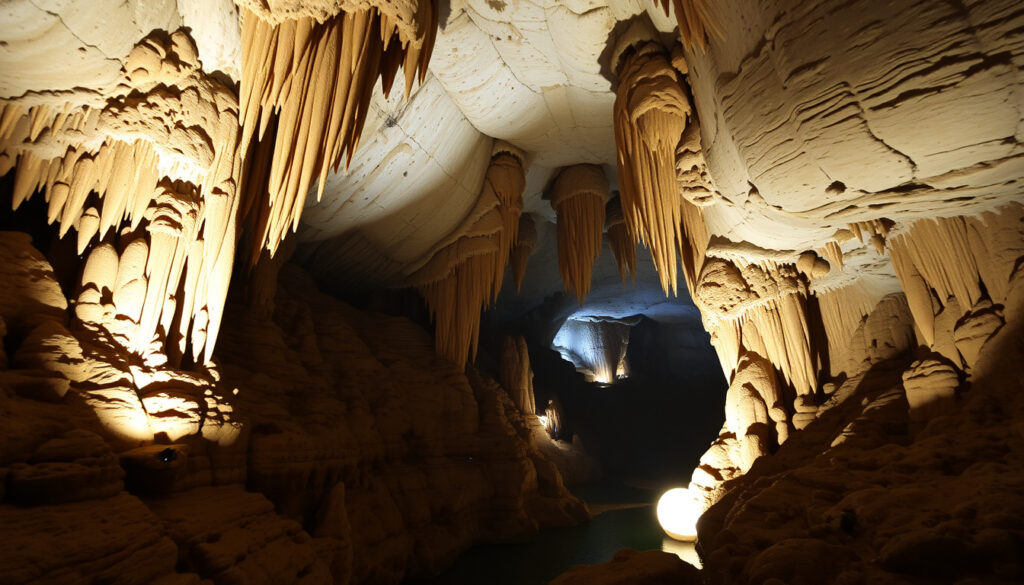
Mammoth Cave National Park – Complete Visitor Guide
Mammoth Cave National Park in central Kentucky preserves the world’s longest known cave system, drawing nearly two million visitors annually to explore over 400 miles of mapped underground passages. The park encompasses more than 52,000 acres of forests, sinkholes, and river systems above ground, offering outdoor experiences that complement its subterranean wonders. Established in 1941 and designated a UNESCO World Heritage Site in 1981, the park represents one of North America’s most significant geological and historical destinations.
For travelers planning a visit, understanding the park’s layout, tour options, and practical details helps ensure a rewarding experience. Whether navigating the cavernous halls on a ranger-led excursion or hiking through the forested ridges above, Mammoth Cave provides access to landscapes that few places on Earth can match.
Where Is Mammoth Cave National Park Located?
The park sits in the heart of Kentucky, approximately 90 miles southwest of Louisville and about 150 miles north of Nashville, Tennessee. The nearest town, Cave City, lies just outside the park boundaries, while the visitor center serves as the primary departure point for all cave tours. The park’s address for GPS navigation is 1 Mammoth Cave Parkway, Mammoth Cave, Kentucky 42259.
Most visitors arrive by car via Interstate 65, which passes near the park’s eastern edge. The nearest major airports are in Louisville (SDF) and Nashville (BNA), each roughly a two-hour drive from the visitor center. No public transportation serves the park directly.
Central Kentucky, near Cave City
52,830 acres
Over 400 miles explored
Approximately 2 million
Directions from Major Cities
From Louisville, take I-65 South toward Bowling Green and exit at Park City/Mammoth Cave (exit 48). Follow the signs approximately seven miles to the visitor center. Drivers from Nashville should head north on I-65 and take the same exit. Those arriving from western Kentucky can access the park via Highway 70 or 259.
Park Map Overview
A detailed park map shows the visitor center location, trailheads, cave entrances, campgrounds, and scenic overlooks. The surface area includes two main regions separated by the Green River, with most facilities clustered near the park’s historic entrance.
- UNESCO World Heritage Site since 1981
- Longest known cave system on Earth with 400+ miles mapped
- More than 5,000 years of documented human history underground
- 85 miles of above-ground hiking trails
- Free park entry for surface activities
- Cave tours require advance reservations
| Fact | Detail |
|---|---|
| Established | 1941 |
| UNESCO Designation | 1981 |
| International Biosphere Reserve | 1990 |
| Entrance Fee | Free (surface access); tours $6–$60 |
| Operating Hours | Vary by season; closed Christmas Day |
| Cave Temperature | 54°F (12°C) year-round |
What Are the Best Mammoth Cave Tours?
The National Park Service offers dozens of cave tour options ranging from easy walks to challenging adventures. All ranger-led tours begin at the Mammoth Cave Visitor Center, where guests should arrive at least 30 minutes before their scheduled departure time for ticket verification. The cave maintains a constant temperature of 54°F, so layering clothing is essential regardless of the season above ground.
Popular tours frequently sell out weeks in advance, particularly during summer months. Visitors are encouraged to book through recreation.gov up to six months ahead. Certain restrictions apply across all cave tours: flash photography, weapons, child carriers, large backpacks, and pets are prohibited. Service animals are the only exception to the pet policy.
Historic Tour
This two-hour, moderate-difficulty excursion covers approximately two miles and showcases the park’s most iconic features. The route passes through the massive Mammoth Dome, along Broadway Avenue, and through the narrow passage known as Fat Man’s Misery. Guides explain the geological formations visible throughout the cave, and visitors often spot the sightless fish that inhabit the underground streams. Some sections of the Historic Tour allow self-guided exploration.
Domes and Dripstones Tour
Lasting roughly two hours, this moderate tour focuses on the cave’s most impressive formations. The highlight is the Frozen Niagara flowstone, a cascading mineral deposit that ranks among the most beautiful in North America. Visitors traverse several staircases and inclined walkways to reach viewing platforms overlooking stalagmites and stalactites. The popularity of this tour means advance booking is strongly recommended.
Wild Cave Tour for Adventurers
For those seeking a more physically demanding experience, the Grand Avenue Tour stretches four hours and includes more than 1,300 stairs. This excursion ventures through slot canyons, gypsum-sparkled tunnels, and tall canyon passages that showcase the cave’s scale and variety. Participants must wear sturdy footwear and be prepared for tight spaces, low ceilings, and dim lighting. The tour is considered the most challenging option available to general visitors.
Tour schedules and availability typically appear on recreation.gov one to three months before the tour date. Checking the site regularly and booking as soon as options appear gives visitors the best chance of securing their preferred experience.
| Tour Name | Duration | Difficulty | Key Features |
|---|---|---|---|
| Violet City Lantern | 3 hours | Moderate | Lantern-lit, Native American art, largest rooms |
| Historic Tour | 2 hours | Moderate | Mammoth Dome, saltpeter mines, sightless fish |
| Self-Guided Discovery | Self-paced | Easy | Rotunda, Audubon Avenue; summer/fall only |
| Domes and Dripstones | ~2 hours | Moderate | Frozen Niagara, stalagmites, stalactites |
| Grand Avenue | 4 hours | Hard | 1,300+ stairs, slot canyons, longest tour |
| Accessible Tour | 2 hours | Easy | Elevator access, Snowball Room, wheelchair-friendly |
What Is Mammoth Cave National Park Known For?
Mammoth Cave holds the distinction of being the world’s longest known cave system, with more than 400 miles of passages currently mapped and new areas discovered regularly. The park became a UNESCO World Heritage Site in 1981 and serves as the core of an International Biosphere Reserve designated in 1990.
World’s Longest Cave System
The sheer scale of Mammoth Cave astounds visitors and researchers alike. Massive rooms like Mammoth Dome rank among the largest known cavern spaces in the world. The cave’s complexity continues to grow as explorers chart additional passages, meaning the official length figures update as new discoveries emerge. According to the AARP travel guide, the cave system extends for more than 400 miles, though the exact measurement changes with ongoing exploration.
Geological Features
The cave contains an extraordinary variety of formations shaped over millions of years. Gypsum flowers and crystals sparkle along tunnel walls in certain sections. The Rainbow Dome and Crystal Lake showcase the mineral-rich water that continues to shape these underground landscapes. Other notable features include the Bottomless Pit, the Snowball Room with its popcorn-like formations, and the towering canyon passages of the Grand Avenue Tour. Sightless fish and other cave-adapted organisms thrive in the constant darkness, representing unique ecosystems found nowhere else on Earth.
5,000 Years of Human History
Native American peoples used the cave for thousands of years before European contact, leaving behind ancient rock art, mining tools, and other artifacts. During the War of 1812, the cave’s mineral deposits were harvested for saltpeter, a key component in ammunition production. Later, enslaved labor was used for mining operations. The park preserves evidence of all these chapters, making it significant not just geologically but culturally and historically.
What Hiking Trails and Above-Ground Activities Are Available?
Beyond the cave system, Mammoth Cave National Park offers 85 miles of trails for hiking, ranging from easy walks suitable for families to challenging backcountry routes. The surface landscape features rolling hills, scenic overlooks, sinkholes, and several cave entrances that can be viewed from above.
Cedar Sink Trail
This popular trail leads to a dramatic sinkhole where the forest floor drops away to reveal the cave system below. The trail is approximately two miles round trip and passes through diverse forest habitat. A short detour leads to a waterfall during wet seasons, and the overlook provides views of the underground river that flows through the area.
River Styx Spring
Named for the mythical river of the underworld, River Styx Spring emerges from the hillside as one of the largest springs in Kentucky. The trail to the spring offers a pleasant walk through hardwood forest and provides insight into the karst landscape that characterizes the region. The spring’s outflow eventually joins the Green River, the park’s primary waterway.
Additional Activities
Beyond hiking, the park accommodates several other recreational pursuits. Camping facilities include both developed campgrounds and backcountry sites for overnight stays. Fishing is permitted in designated areas of the Green River, and kayaking opportunities exist on the waterway for experienced paddlers. Horseback riding is available on certain trails, and the visitor center area provides access to ranger-led programs suitable for families. Those seeking accommodations might consider nearby Cabin Rentals Near Me options for extended stays.
What Are the Practical Details for Visiting?
Planning ahead helps visitors make the most of their time at Mammoth Cave. The National Park Service website provides current information on hours, alerts, and tour availability. Understanding fees, accessibility options, and seasonal variations ensures a smooth experience.
Fees and Hours
Park entry is free, with no entrance fee charged for hiking, visiting the visitor center, or accessing surface trails. Cave tours range from $6 per person for the self-guided option to $60 for premium experiences like the Violet City Lantern Tour. Tours operate year-round except Christmas Day, in the Central Time Zone. Hours vary by season, with the visitor center typically opening between 8 and 9 AM and closing between 4:30 and 6:30 PM depending on the time of year.
Tours sell out quickly, especially during summer and holiday periods. Booking six months in advance is advisable for popular options, and checking the recreation.gov website one to three months before your visit ensures you have the most current schedule information.
Accessibility Options
Mammoth Cave offers a fully wheelchair-accessible tour that uses an elevator to descend into the cave. The Accessible Tour covers approximately half a mile and visits the Snowball Room with its distinctive formations. This tour does not require navigating stairs and provides an opportunity for visitors with mobility challenges to experience the cave’s wonders. Additional accessibility information is available through the park’s website regarding service animals, audio tours, and accessible trails above ground.
Best Time to Visit
The park welcomes visitors throughout the year, though the experience varies by season. Summer brings the highest visitor numbers and the longest operating hours for surface activities. Self-guided tours are available only during summer and fall months. Spring and fall offer milder temperatures, thinner crowds, and comfortable conditions for both cave and surface exploration. Winter visitors enjoy the solitude of a quieter park, though self-guided options are unavailable and some surface facilities may have limited hours.
A Timeline of Mammoth Cave
The story of Mammoth Cave spans thousands of years of natural formation and human interaction. While the geological processes began millions of years ago, documented human history at the site stretches back millennia.
- 1798 — First written records of cave exploration by early settlers
- 1812–1830s — Saltpeter mining operations during and after the War of 1812
- 1830s–1840s — Expansion of mining with enslaved labor; peak commercial use
- 1840s–1920s — Tourist era begins; early guided tours develop
- 1925 — Stephen Bishop, an enslaved guide, becomes one of the first to map new passages
- 1941 — Mammoth Cave National Park officially established
- 1981 — Designated as a UNESCO World Heritage Site
- 1990 — Named core of an International Biosphere Reserve
- Present — Ongoing exploration; more than 400 miles of passages mapped
What We Know for Certain—And What Remains Unclear
Visitors often have questions about what information is firmly established versus what remains subject to discovery or change. The following comparison highlights areas of clarity and uncertainty.
| Established Facts | Areas of Uncertainty |
|---|---|
| Park established in 1941 | Exact cave length (new passages discovered regularly) |
| UNESCO World Heritage Site since 1981 | Tour availability on specific dates (check for updates) |
| Cave temperature holds at 54°F year-round | Seasonal trail conditions and potential closures |
| Over 400 miles of mapped passages | Future discoveries may expand known extent |
| Free park entry; tour fees apply | Fee structures subject to change |
Why Mammoth Cave Matters
Mammoth Cave represents a rare convergence of geological significance, biological diversity, and human history. The cave system demonstrates millions of years of limestone dissolution through groundwater infiltration, creating passageways that rank among the largest and longest on the planet. Its designation as a UNESCO World Heritage Site recognizes these extraordinary values.
The park also serves as a living laboratory for scientists studying cave-adapted ecosystems. Species found within its passages, including sightless fish and other organisms uniquely suited to total darkness, provide insights into evolution and adaptation in extreme environments. Conservation efforts focus on protecting both the underground and surface habitats that comprise this complex ecosystem.
For the millions who visit annually, Mammoth Cave offers perspective on geological time scales that dwarf human history. Standing in the massive chambers, walking passages carved over millennia, and contemplating the thousands of years of human presence at the site create an experience that few destinations can match. The park bridges education and wonder, making it equally valuable for scientific study and recreational exploration.
The world’s longest known cave system—Mammoth Cave preserves not just geological wonders but 5,000 years of human history beneath Kentucky’s surface.
Summary and Next Steps
Mammoth Cave National Park offers a distinctive blend of underground exploration and surface recreation in central Kentucky. The park’s 400-plus miles of mapped passages, UNESCO World Heritage status, and more than 5,000 years of documented history make it a destination of international significance. Planning a visit involves understanding the variety of tour options, booking well in advance through recreation.gov, and preparing for the cave’s constant 54°F temperature. Those interested in related deep-earth explorations might find the How Deep Is the Ocean article equally fascinating.
Frequently Asked Questions
Is Mammoth Cave worth visiting?
Mammoth Cave consistently ranks among Kentucky’s top attractions and draws nearly two million visitors annually. The combination of geological wonders, historical significance, and outdoor recreation makes it worthwhile for most travelers. Those with mobility limitations can still enjoy the accessible tour options.
What is the entrance fee for Mammoth Cave?
Park entry is free. Visitors pay only for cave tours, which range from $6 for self-guided options to $60 for premium lantern-lit experiences. Surface activities like hiking and visiting the visitor center require no fee.
Is Mammoth Cave accessible for wheelchairs?
Yes, an elevator-accessible tour visits the Snowball Room without requiring stairs. The tour covers approximately half a mile and is designed to accommodate wheelchair users. Surface trails and facilities near the visitor center also have accessibility features.
How far in advance should I book cave tours?
Reservations can be made up to six months in advance through recreation.gov. Popular tours often sell out weeks before the tour date, particularly during summer and holiday periods. Checking for schedule releases one to three months before your visit is recommended.
What should I bring for a cave tour?
Sturdy shoes with good traction are essential, as cave floors can be wet and uneven. A light jacket or layers are necessary given the constant 54°F temperature. Flash photography, weapons, child carriers, large backpacks, and pets are prohibited inside the cave.
Can I visit Mammoth Cave in winter?
The park remains open year-round, and cave tours continue during winter months. Self-guided tours are unavailable, but ranger-led options operate daily except Christmas Day. Winter visits offer the advantage of smaller crowds and a different perspective on the park.
More related posts
 Nose Piercing Near Me: Cost, Pain, and Safety Tips
 The Book of Boba Fett: Cancelled, Viewing Order & Reception
 Grand Theft Auto 6: 2026 Release Date, Price & Cost
 Highest 2 Lowest Showtimes: Where to Watch, AMC Refusal
 48 Inches in Feet: Conversion and Height Guide for Kids
 Pink Eye vs Allergies: How to Tell the Difference and What to Do
 What Is a Fascist Definition? Simple Explanation & Key Examples
 Ravens vs Dolphins Match Player Stats – 2025 Recap