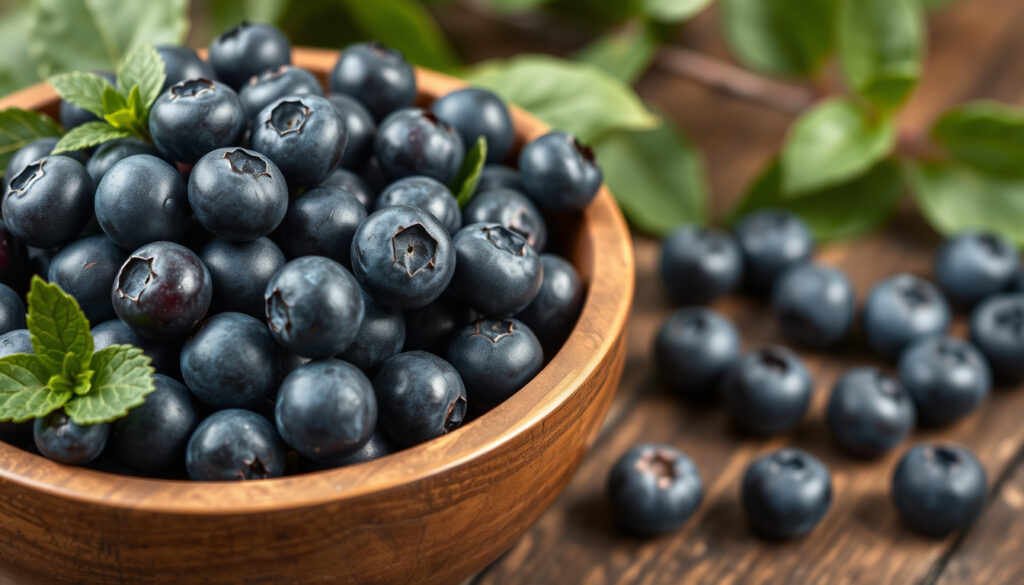
Are Blueberries Good for You? Benefits, Risks, and Daily Intake
You’ve probably heard blueberries called a superfood so often the word has lost meaning. But when you start digging into the research, a more complicated picture emerges — these little berries are packed with nutrients that support your heart and brain, yet some doctors advise caution for certain people. This guide cuts through the hype to give you the evidence-based facts on daily intake, potential risks, and how blueberries stack up against other fruits like bananas.
Calories per 1 cup (148g): 84 kcal ·
Dietary fiber: 3.6 g ·
Vitamin C (% DV): 16% ·
Vitamin K (% DV): 24% ·
Antioxidant capacity (ORAC): 9,019 μmol TE/100g
Quick snapshot
- Blueberries reduce oxidative stress and inflammation (PMC review of blueberry research)
- Regular consumption improves cardiovascular markers (Harvard Health Publishing)
- Optimal dosage for disease prevention (PMC review of blueberry research)
- Direct causation in cancer risk reduction (PMC review of blueberry research)
- Daily consumption shows beneficial cardiometabolic effects up to 24 weeks in RCTs (Frontiers in Nutrition)
- More research needed on long-term high intake effects in people with kidney conditions
Five key nutritional facts, one pattern: blueberries deliver meaningful micronutrients for very few calories.
| Nutrient | Per 1 cup (148g) | % Daily Value |
|---|---|---|
| Calories | 84 kcal | — |
| Dietary fiber | 3.6 g | 13% |
| Vitamin C | 14.4 mg | 16% |
| Vitamin K1 | 29 μg | 24% |
| Manganese | 0.5 mg | 22% |
| Anthocyanins | 300–400 mg | — |
| Oxalates | 5–10 mg | — |
| Glycemic index | 53 | Low |
The implication: blueberries are nutrient-dense, but the same compounds that drive benefits also create the need for caution in specific populations.
Is it safe to eat blueberries every day?
How many blueberries can you safely eat per day?
For most people, 1 to 2 cups of blueberries per day is safe and beneficial. Healthline (nutrition resource) notes that even about one-third of a cup daily is associated with health benefits. A 2020 review from PMC (National Institutes of Health) supports this, reporting that moderate intake of roughly one-third cup per day is linked to reduced disease risk.
- 1 cup fresh or frozen = one serving (WebMD (health information site))
- 2 cups = upper safe limit for most adults
- Harvard Health recommends 3+ half-cup servings per week for heart benefits (Harvard Health Publishing (medical institution))
Potential risks of daily blueberry consumption
While rare, some people should watch their intake. The primary concerns involve oxalate accumulation, pesticide residue, and medication interactions. Conventional blueberries appear on the Environmental Working Group’s “Dirty Dozen” list for pesticide residue, so washing thoroughly or choosing organic matters.
A person taking warfarin who adds two cups of blueberries daily could see their INR destabilize because of the vitamin K content — not dangerous for most, but a real risk for the anticoagulated patient.
The trade-off: daily blueberries are safe for the vast majority, but the vitamin K and oxalate content mean those on blood thinners or with kidney stone history should consult a doctor first.
Why do some doctors not want you to eat blueberries?
The vitamin K factor
Vitamin K plays a central role in blood clotting, and blueberries provide 24% of the daily value per cup. For people taking anticoagulants like warfarin (Coumadin), a sudden increase in blueberry intake can interfere with medication effectiveness. Harvard Health Publishing (Harvard Medical School) emphasizes consistency over elimination — the key is keeping intake steady so medication dosing remains predictable.
Fructose and sugar concerns
Blueberries contain natural fruit sugar — about 15 grams per cup. While this is relatively low compared to many fruits, Healthline (nutrition resource) notes the glycemic index is 53, which is low. For diabetics, the concern isn’t the absolute sugar content but the portion size; a single cup is fine, but excessive amounts could spike blood sugar in sensitive individuals.
Oxalate content and kidney stones
Blueberries contain oxalates — roughly 5 to 10 mg per cup. For the 1 in 11 Americans with a history of calcium oxalate kidney stones, high oxalate intake can contribute to stone formation. The PMC review (NIH database) notes that long-term effects of high daily intake in people with kidney issues remain unclear.
The pattern: the same nutrients that make blueberries healthy — vitamin K, fiber, anthocyanins — also create the need for individual caution. Doctors don’t universally warn against them; they warn against uninformed overconsumption.
What should you not mix with blueberries?
Medications that interact with blueberries
The primary interaction concern involves blood thinners. Healthline (nutrition resource) reports that the vitamin K content in blueberries can reduce the effectiveness of warfarin if intake suddenly increases. No evidence suggests dangerous interactions with other common medications, but anyone on anticoagulants should discuss dietary changes with their doctor.
Supplements and foods to avoid combining
Some sources suggest calcium supplements may bind to oxalates in blueberries, potentially reducing absorption — though the clinical significance remains unclear. As for food pairings, there are no known dangerous combinations, though some nutrition sources advise against mixing large amounts of blueberries with dairy due to potential oxalate-calcium binding in the gut.
The person on warfarin who adds a morning blueberry smoothie with kale and spinach — both also high in vitamin K — could inadvertently multiply their vitamin K intake by 5x without realizing it. Consistency, not elimination, is the medical recommendation.
The implication: most food and medication combinations with blueberries are safe, but vitamin K-containing foods require consistency for those on anticoagulants.
What is better for you, banana or blueberries?
Two popular fruits, one clear pattern: blueberries excel in antioxidants and low sugar, bananas win on potassium and vitamin B6.
| Nutrient (per 100g) | Blueberries | Bananas |
|---|---|---|
| Calories | 57 kcal | 89 kcal |
| Sugar | 10 g | 12 g |
| Dietary fiber | 2.4 g | 2.6 g |
| Potassium | 77 mg | 358 mg |
| Vitamin C | 9.7 mg (16% DV) | 8.7 mg (10% DV) |
| Vitamin B6 | 0.1 mg | 0.4 mg |
| Anthocyanins | 300–400 mg | 0 mg |
| Glycemic index | 53 (low) | 51 (low) |
The trade-off: blueberries are better for antioxidant-driven health goals and lower sugar intake. Bananas are superior for potassium replenishment and vitamin B6. Neither is “better” — it depends on whether you’re optimizing for brain protection or post-workout recovery.
Which fruit wins for antioxidants?
This isn’t close. Blueberries contain 300–400 mg of anthocyanins per 100g, a class of antioxidants linked to reduced oxidative stress and improved cognitive function. Bananas have virtually none. The PMC review (NIH database) reports that the antioxidant capacity (ORAC) of blueberries is 9,019 μmol TE/100g, among the highest of common fruits.
Which is better for blood sugar control?
Both fruits have low glycemic index scores — blueberries at 53, bananas at 51 according to Healthline (nutrition resource). However, blueberries contain less total sugar per serving (10g vs 12g per 100g), making them the slightly better choice for blood sugar management. A 2020 review found that blueberries were associated with a 26% reduction in type 2 diabetes risk in prospective cohorts.
For the person with prediabetes trying to optimize fruit choices: blueberries deliver more protective polyphenols per gram of sugar than bananas. But the person training for a marathon might benefit more from bananas’ potassium and carbohydrate profile post-run.
What is the best time to eat blueberries?
Morning vs evening consumption
No rigorous clinical trial has established an optimal time for blueberry consumption. However, Frontiers in Nutrition (peer-reviewed journal) reports that polyphenol metabolism is influenced by circadian rhythms, suggesting morning consumption may align with natural metabolic peaks. A morning smoothie or oatmeal topping probably beats late-night snacking — not because the fruit changes, but because the body processes it differently. For those interested in the broader implications of fruit choices and athletic performance, the Dodgers Blue Jays 2025 World Series offers further insights.
Timing for maximum antioxidant absorption
Eating blueberries with a meal containing healthy fat (like yogurt, nuts, or avocado) may improve the absorption of fat-soluble antioxidants such as vitamin E and certain carotenoids. Healthline (nutrition resource) notes that pairing berries with a small amount of fat can enhance nutrient bioavailability.
Blueberries as a pre- or post-workout snack
Blueberries show particular promise for exercise recovery. Their polyphenols can reduce oxidative stress and muscle soreness after exercise. A 2024 Frontiers review suggests that post-workout consumption may aid muscle recovery — the antioxidants counter exercise-induced inflammation.
Why this matters: the “best” time is the time you eat them consistently. A person who eats blueberries with morning oatmeal and nuts gets better nutrient absorption than someone who eats them alone at midnight.
Three expert perspectives, one consistent conclusion: blueberries are a legitimate health food with strong evidence, but individual context matters more than blanket recommendations.
“Blueberries are among the berries with the highest antioxidant capacity.”
“Blueberries can help manage cholesterol and support body functions.”
“Regular blueberry consumption supports cardiovascular health and glucose regulation.”
— AJ Stull, PMC review (NIH)
For the average person without kidney issues or anticoagulant concerns, the decision is clear: include 1 to 2 cups of blueberries most days, washed thoroughly, ideally organic if budget allows. For the person on warfarin or with a history of calcium oxalate stones, the choice is equally clear but different: consult a doctor, keep portions modest and consistent, and never eliminate a healthy fruit without medical guidance. The evidence supports blueberries — just not as a one-size-fits-all prescription.
Related reading: How Many Calories in a Banana? · Alani Nu Energy Drink: Is It Healthy?
medicalnewstoday.com, health.clevelandclinic.org, eatingwell.com
For a deeper look at the science behind these claims, you can explore the detailed breakdown of blueberry health benefits from another reliable source.
Frequently asked questions
Should people over 60 stop eating blueberries?
No. For most older adults, blueberries remain beneficial due to their cognitive and cardiovascular support. The only exceptions involve those on blood thinners or with existing kidney conditions. Frontiers in Nutrition reports that higher blueberry intake is associated with slower cognitive decline — a key concern for aging populations.
Why can’t you eat bananas and blueberries together?
You absolutely can. There’s no known negative interaction between these fruits. This myth likely stems from the oxalate-calcium binding concern — blueberries contain oxalates, bananas contain potassium and some calcium — but the amounts are negligible. Combining them is both safe and nutritionally complementary.
Can blueberries cause digestive issues?
In very large amounts (3+ cups daily), the fiber content — 3.6g per cup — could cause bloating or diarrhea in sensitive individuals. WebMD (health information site) notes that some people may also react to the sorbitol content in berries.
Do blueberries have more sugar than other berries?
Blueberries contain about 10g of sugar per 100g, which is slightly more than raspberries (4.4g) or strawberries (4.9g), but less than grapes (16g) or cherries (12.8g). Healthline (nutrition resource) ranks them as a medium-sugar berry — lower than tropical fruits but not the lowest among berries.
Are organic blueberries necessary?
Blueberries appear on the Environmental Working Group’s “Dirty Dozen” — conventionally grown ones often carry pesticide residues. While washing thoroughly reduces risk, Harvard Health Publishing (medical institution) suggests organic when budget allows, but emphasizes that the health benefits of eating any blueberries outweigh the pesticide risks of conventional options.
Can blueberry supplements replace whole fruit?
No. Whole blueberries provide fiber, water, and a synergistic mix of compounds that supplements can’t replicate. The PMC review (NIH database) emphasizes that whole fruit consumption is associated with disease risk reduction, while isolated supplement studies show weaker and less consistent results.
More related posts
 Nail Salon Near Me Open: Dublin Tipping & Etiquette
 Fruit Fly Trap DIY: Best Homemade Traps That Work Fast
 I Want It That Way: Song History, Meaning, and Why It’s So Popular
 The White Lotus Season 3 Cast: Full Roster & Firing Drama
 American Airlines Carry-on Size: Rules, Enforcement & Tips
 What Does a Hernia Feel Like? Symptoms & Signs Guide
 Carnivore Diet Food List: What to Eat and Avoid
 Best Budget Travel Backpacks 2026: Tested & Reviewed